Aquaculture in Region 7
Milkfish, tilapia, shrimp, seaweed, grouper, mud crab, and oyster farming across Central Visayas.
🐟 Aquaculture and Fisheries Overview
Region 7 has extensive coastal and freshwater resources. Aquaculture is a major contributor to food security and livelihood across all four provinces.
Aquaculture Production
| Species | Production (MT) | Key Areas | Price/kg |
|---|---|---|---|
| Milkfish (Bangus) | 18,000 | Bohol, Cebu | ₱80-120 |
| Tilapia | 12,000 | Cebu, NegOr | ₱70-100 |
| Shrimp/Prawns | 3,500 | NegOr, Cebu | ₱250-400 |
| Seaweed | 8,000 | Bohol, NegOr | ₱15-25 (dried) |
| Grouper | 1,200 | Cebu, NegOr | ₱300-500 |
| Mud Crab | 2,800 | NegOr, Bohol | ₱200-350 |
| Oyster/Mussel | 1,500 | Bohol, Cebu | ₱100-200 |
| Total Aquaculture | ~47,000 |
Source: PSA/Fisheries Statistics, 2023; DA-BFAR Region 7
Capture Fisheries
~15,000 registered fishing vessels. ~120,000 MT marine capture annually. Major species: sardines, mackerel, tuna, squid, anchovy.
Key Fishing Grounds
- Bohol: Danajon Bank (double barrier reef), Tañon Strait — richest fishing ground
- Cebu: Tañon Strait, Olango Islands, Camotes Sea
- NegOr: Bais Bay, Tañon Strait, Camotes Sea
- Siquijor: Siquijor coastal waters — smaller scale
Government Support
- DA-BFAR: Fishing gear, boats, and livelihood support
- PCIC: Fish insurance coverage
- Fisherfolk cooperatives: Collective marketing and credit access
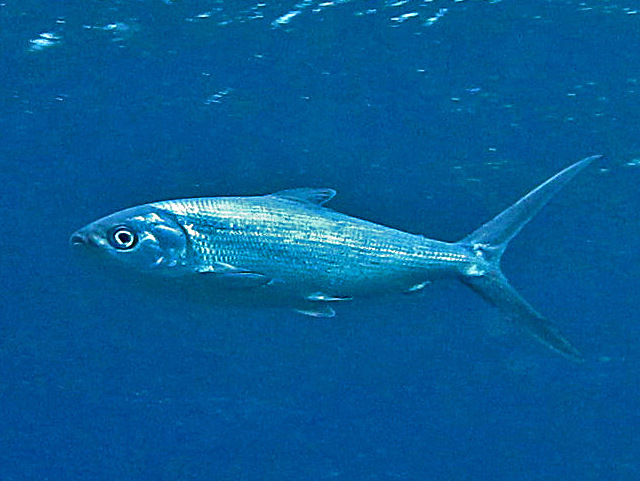 Milkfish (Bangus) — Photo: Wikimedia CC BY-SA 4.0
Milkfish (Bangus)
Overview
The most popular aquaculture species in Region 7. 18,000 MT annual production. Versatile — raised in ponds, pens, and cages. National fish of the Philippines.
Production Systems
Pond Culture
Traditional method. 0.5-2 ha ponds. Stocking: 5,000-10,000 fingerlings/ha. Harvest at 250-350g in 4-6 months. Feed: commercial pellets + natural food. Cost: ₱30,000-50,000/ha/crop.
Cage Culture
Higher density. 5x5x3 m cages. Stocking: 50-80 fingerlings/cage. Harvest at 250-350g in 3-4 months. Used in lakes and coastal areas. Feed cost: ₱150-200/fingerling to harvest.
Pen Culture
Enclosed shallow areas. 0.5-5 ha pens. Natural food supplementation. Lower feed cost but vulnerable to typhoons.
How to Raise Milkfish
Site Selection
Brackish water (15-32 ppt salinity). Tidal flow for water exchange. Away from pollution sources. Good soil for pond construction.
Stocking
Fingerlings: 2-3 inch (5-8 cm). Source from BFAR hatcheries or certified private hatcheries. Acclimate slowly (30-60 min floating bag method). Stock in early morning.
Feeding
Commercial bangus pellets (28-32% protein). Feed 3-5% of body weight/day, split into 2-3 feedings. Adjust based on consumption. Supplement with rice bran or duckweed in ponds.
Harvest
Harvest at 250-350g (6-8 months). Use seine nets or drain harvesting. Debone for boneless bangus: premium price ₱200-300/kg vs. ₱80-120 whole.
Products
- Whole bangus: ₱80-120/kg — wet market staple
- Boneless bangus: ₱200-300/kg — premium product, daing,relleno
- Smoked bangus (Tinapa): ₱150-250/kg — traditional preserved product
- Smoked dried bangus (Daing): ₱180-280/kg — shelf-stable
Economics
Pond (1 ha): Stock 8,000 fingerlings. Harvest 70% survival = 5,600 fish x 300g = 1,680 kg. At ₱100/kg = ₱168,000 gross. Cost: ₱80,000-100,000. Net: ₱68,000-88,000/ha/crop. 2 crops/year possible.
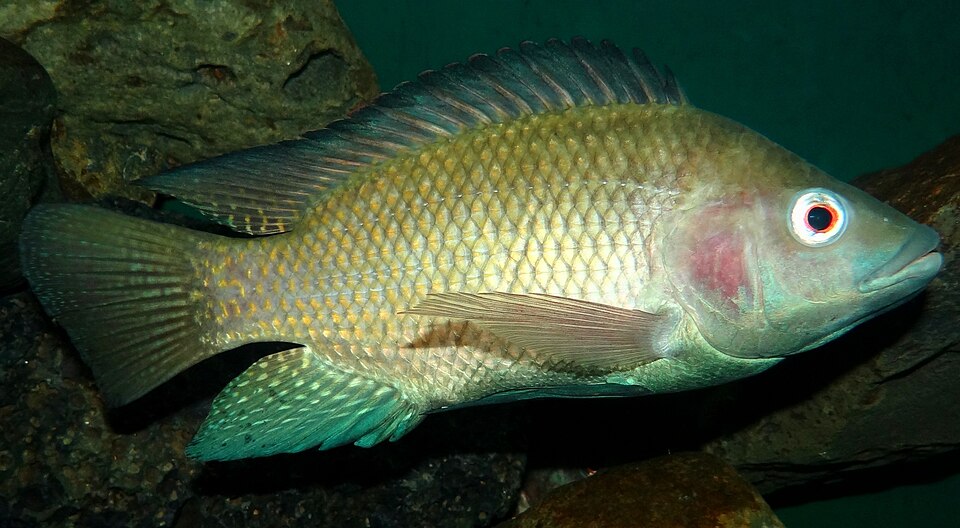 Nile tilapia — Photo: Wikimedia CC BY-SA 3.0
Tilapia
Overview
12,000 MT annual production. Second most important freshwater species. Hardy, fast-growing, and adaptable. Cebu and Negros Oriental are the main producers.
Varieties
- Nile Tilapia (GIFT strain): Most common. Fast growth (250-400g in 4-5 months). BFAR distributed.
- Red Tilapia: Premium appearance. ₱150-200/kg vs. ₱70-100 for green tilapia. Growing market.
- Hashemi Tilapia: Improved strain from Egypt. Faster growth than GIFT.
Production Areas
- Cebu: Freshwater ponds in Cebu City hinterlands, Toledo, Balamban
- NegOr: Lake Balanan, freshwater ponds in Dumaguete area
- Bohol: Freshwater ponds in Jagna, Loay
How to Raise Tilapia
Stocking
Fingerlings: 2-3 inch. Stock at 30,000-50,000/ha (semi-intensive). Use hapas (net enclosures) for nursery phase (4-6 weeks) before stocking in ponds.
Feeding
Commercial fish pellets (25-32% protein). Feed 3-5% body weight/day. Supplement with duckweed, azolla, rice bran. Tilapia also eat phytoplankton in fertilized ponds.
Water Management
pH 6.5-8.5 optimal. Aerate ponds if stocking >30,000/ha. Maintain 1-1.5 m water depth. Partial water exchange during dry season.
Harvest
Harvest at 200-350g in 4-6 months. Use seine nets. Can do partial harvest (selective) to maintain growth of remaining fish.
Economics
Pond (1 ha): Stock 40,000 fingerlings. Harvest 80% = 32,000 fish x 250g = 8,000 kg. At ₱80/kg = ₱640,000 gross. Feed cost: ₱250,000-350,000. Net: ₱150,000-250,000/ha/crop. 2-3 crops/year possible.
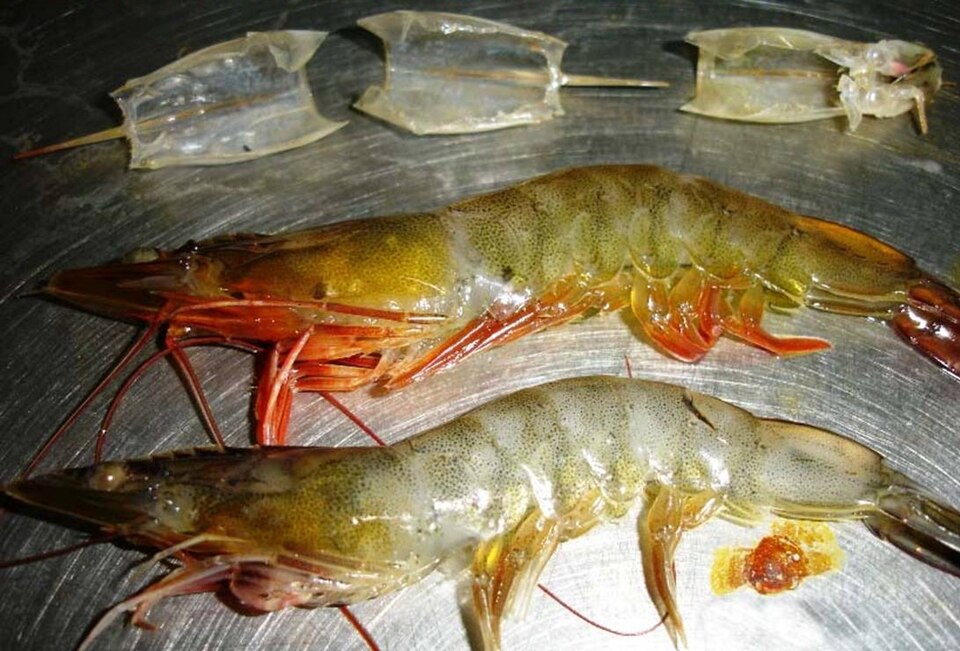 Whiteleg shrimp — Photo: Wikimedia CC BY-SA 3.0
Shrimp and Prawns
Overview
Most valuable aquaculture species per kilogram. 3,500 MT annual production. Negros Oriental is the shrimp capital of Region 7. Export-oriented industry.
Species
- Black Tiger Shrimp (Penaeus monodon): Large size (30-60g). ₱350-500/kg. Traditional species.
- White Shrimp (Litopenaeus vannamei): Faster growth, disease-resistant. ₱250-400/kg. Most planted now.
- Giant Freshwater Prawn (Macrobrachium rosenbergii): Freshwater. ₱400-700/kg. Premium product.
Key Areas
- NegOr: Bais Bay, Manjuyod, Tanjay — largest concentration
- Cebu: Southern coastal municipalities
- Bohol: Jagna, Loay — smaller scale
How to Raise Shrimp
Pond Preparation
Drain, dry, and lime ponds. Fill with filtered seawater (25-35 ppt). Plankton culture: fertilize 1-2 weeks before stocking. Zero-exchange systems reduce disease risk.
Stocking
Post-larvae (PL) from certified hatcheries. Stock at 100,000-150,000/ha (semi-intensive). Acclimate PL carefully. Stock at night or early morning.
Feeding
Commercial shrimp pellets (30-38% protein). Feed 3-5% body weight/day, 4-6 feedings. Feed trays for monitoring. Adjust based on consumption (2-hour rule).
Health Management
Monitor water quality daily (pH, DO, salinity, ammonia). Test for White Spot Syndrome Virus (WSSV) regularly. Probiotics in feed reduce disease. Strict biosecurity: foot baths, vehicle disinfection.
Harvest
Harvest at 20-30g (120-150 days). Use drag nets or drain harvesting. Ice immediately. Grading by size for premium pricing.
Economics
Pond (1 ha): Stock 120,000 PL. Harvest 70% = 84,000 shrimp x 20g = 1,680 kg. At ₱300/kg = ₱504,000 gross. Feed cost: ₱250,000-300,000. Net: ₱150,000-200,000/ha/crop. 2-3 crops/year. High risk, high reward.
Challenges
- White Spot Syndrome Virus (WSSV) — devastating, no cure
- Early Mortality Syndrome (EMS) — strict biosecurity needed
- High capital requirement (₱200,000-500,000/ha)
- Environmental concerns: mangrove conversion
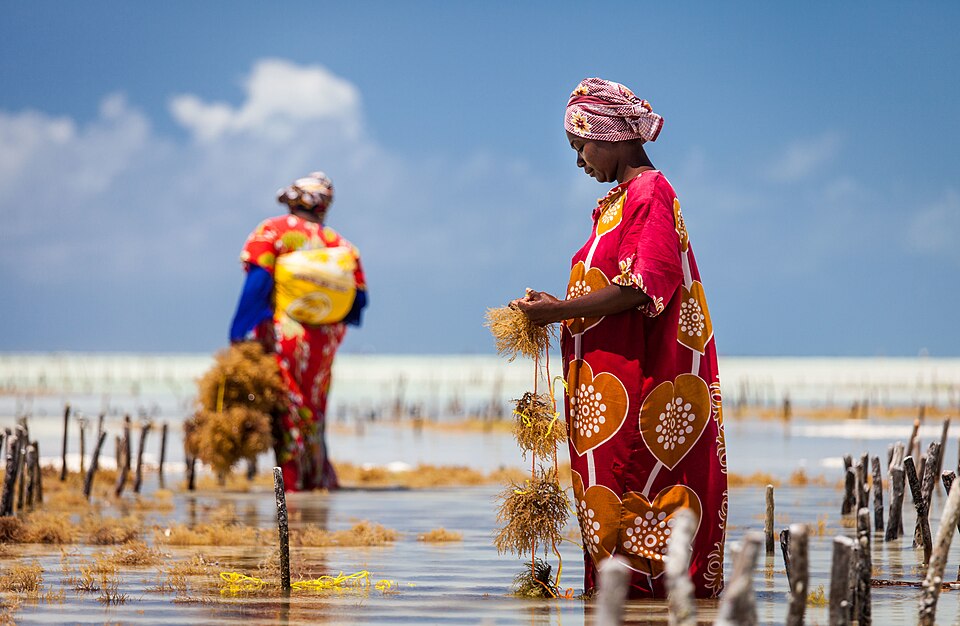 Seaweed harvest — Photo: Wikimedia CC BY-SA 4.0
Seaweed Farming
Overview
8,000 MT annual production. Major export commodity. Bohol is the leading producer. Seaweed is processed into carrageenan (food thickener) and agar.
Species
- Cottonii (Kappaphycus alvarezii): Most planted. Carrageenan extraction. ₱15-25/kg dried. Bohol dominant.
- Spinosum (Eucheuma denticulatum): Lower carrageenan quality. ₱10-18/kg dried. Mixed with cottonii.
- Sea Grape (Caulerpa lentillifera): Specialty product. ₱200-500/kg fresh. Growing export demand.
Key Areas
- Bohol: Carlos P. Garcia, Pres. Carlos P. Garcia, Bien Unido — largest cottonii producer
- NegOr: Bais, Amlan — mixed species
- Cebu: Small-scale coastal areas
How to Farm Seaweed
Site Selection
Clean coastal waters, 1-3 m depth. Moderate current flow. Away from river mouths (freshwater kills seaweed). Coral areas provide natural anchoring.
Propagation
Wild-type: tie fragments to nylon lines (monoline method). Hatchery: tissue culture for disease-free stocks. Plant at 200-300 g/m line. Lines anchored with stakes or coral blocks.
Growth
Harvest every 45-60 days (3-4 harvests/year). Each harvest doubles biomass. Monitor for ice-ice disease (whitening) and epiphytes. Remove weeds weekly.
Post-Harvest
Sun-dry on bamboo racks (2-3 days). Target 30-35% moisture. Wash with clean seawater before drying. Store in clean, dry area. Sell to carrageenan processors.
Economics
1,000 m of lines: Plant 200 kg seedstock. Harvest 3 cycles = 1,200 kg dried. At ₱20/kg = ₱24,000 gross per cycle. Low capital: ₱10,000-20,000 setup. Net income: ₱15,000-30,000/year for small-scale. Scale to 5,000+ m for meaningful income.
Challenges
- Ice-ice disease — environmental stress causes bleaching
- Typhoon damage — lines destroyed, must replant
- Low farmgate price — dominated by 2-3 buyers
- Limited local processing — raw material export only
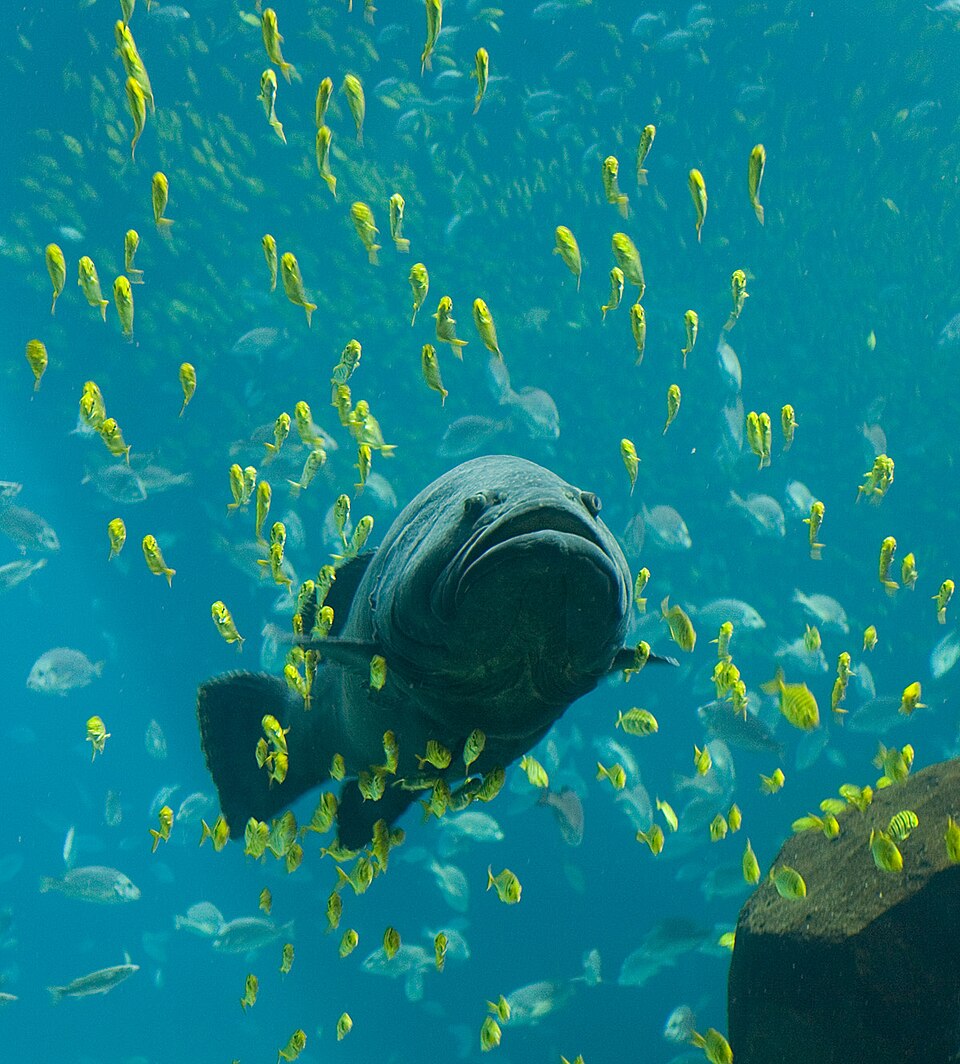 Grouper — Photo: Wikimedia CC BY 2.5
Grouper Culture
Overview
1,200 MT annual production. Highest-value finfish in Region 7. Primarily for live export to Hong Kong and China. Cebu and NegOr are the main producers.
Species
- Orange-Spotted Grouper (Epinephelus coioides): Most common. ₱300-500/kg. Fast growth.
- Camouflage Grouper (Epinephelus polyphekadion): Premium live fish. ₱500-800/kg. Higher demand.
- Hybrid Grouper: Orange-spotted x camouflage. Faster growth, disease-resistant.
Key Areas
- Cebu: Olango Islands, Mactan — cage culture
- NegOr: Bais Bay, Apo Island area
- Bohol: Panglao, Balicasag — emerging areas
How to Raise Grouper
Stocking
Fingerlings: 3-5 inch from BFAR or private hatcheries. Stock 20-50 fingerlings/cage (5x5x3 m). Acclimate carefully — grouper are stress-sensitive.
Feeding
Trash fish (sardines, anchovy) or commercial pellets. Feed 5-8% body weight/day, 1-2 feedings. Convert to pellets during grow-out for better water quality.
Growth
Harvest at 300-500g in 10-14 months. Larger fish (1 kg+) command premium. Live fish transport requires oxygen and ice.
Economics
Cage (5x5x3 m): Stock 30 fingerlings at ₱25 each = ₱750. Feed cost: ₱3,000-5,000. Harvest 80% survival = 24 fish x 400g = 9.6 kg. At ₱400/kg = ₱3,840 gross. Net: ₱500-1,500/cage/crop. Multiple cages needed for income.
Challenges
- High fingerling cost (₱20-50/piece)
- Kamafish disease (bacterial) — major cause of mortality
- Typhoon damage to cages
- Live fish transport logistics
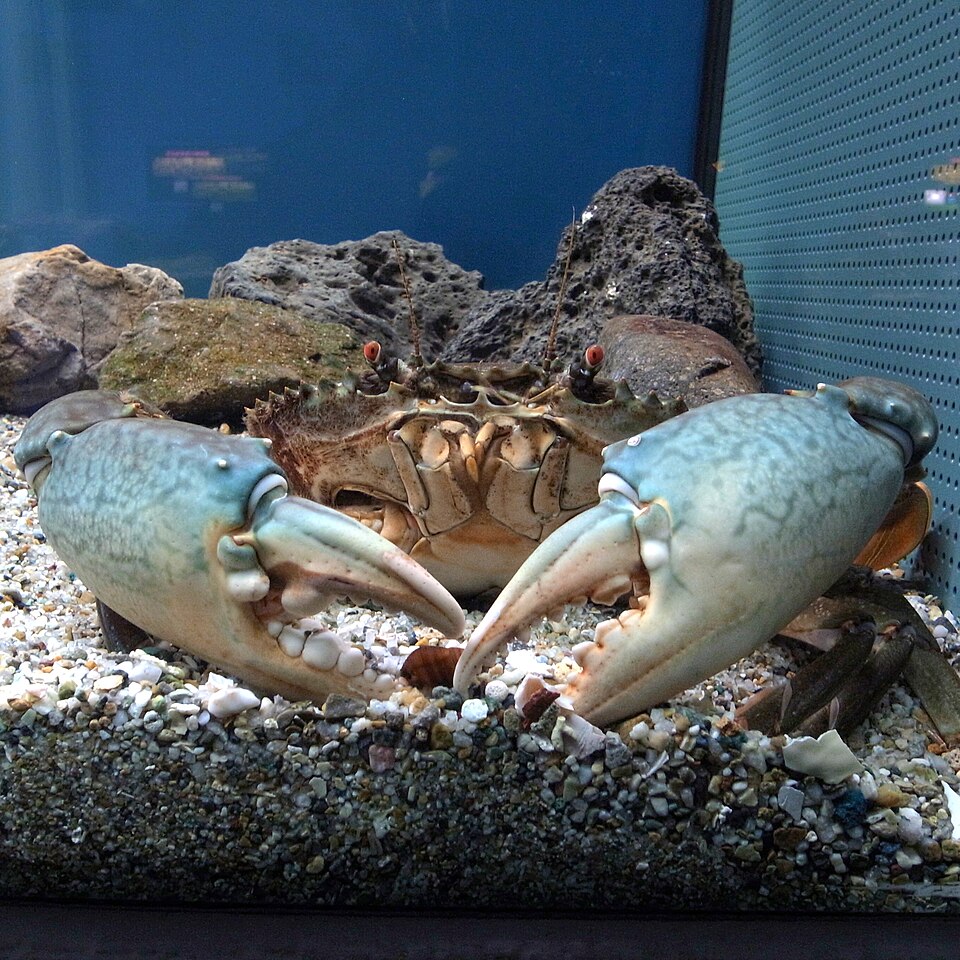 Mud crab — Photo: Wikimedia CC BY-SA 3.0
Mud Crab Fattening
Overview
2,800 MT annual production. High-value product for local and export markets. Negros Oriental and Bohol lead production. Both wild-caught fattening and grow-out culture.
Species
- Scylla serrata: Giant mud crab. Most valuable. ₱250-400/kg live weight.
- Scylla olivacea: Smaller but more abundant. ₱150-250/kg.
Key Areas
- NegOr: Bais Bay, Manjuyod — crab fattening capital
- Bohol: coastal mangrove areas, Talibon
- Cebu: small-scale in coastal municipalities
How to Fatten Mud Crab
Source
Buy wild-caught thin crabs (low meat content) at ₱80-150/kg. Select intermolt stage (soft shell indicates recent molt — avoid). Size: 300-500g.
Fattening
Individual enclosures (hapa nets or bamboo pens). Feed with trash fish, snails, or commercial pellets. Fattening period: 3-4 weeks. Crabs gain 15-25% body weight.
Harvest
Check weekly by weight. When crab is heavy for its size (meat-filled), harvest. Sell live (highest price) or cook and freeze (lower price but wider market).
Economics
100 crabs fattening: Buy thin crabs ₱100 x 100 = ₱10,000. Feed: ₱3,000. Sell fattened at ₱300/kg x 100 x 0.4kg = ₱12,000 gross. Net: ₱2,000-4,000/cycle. 8-10 cycles/year = ₱16,000-40,000/year from small-scale operation.
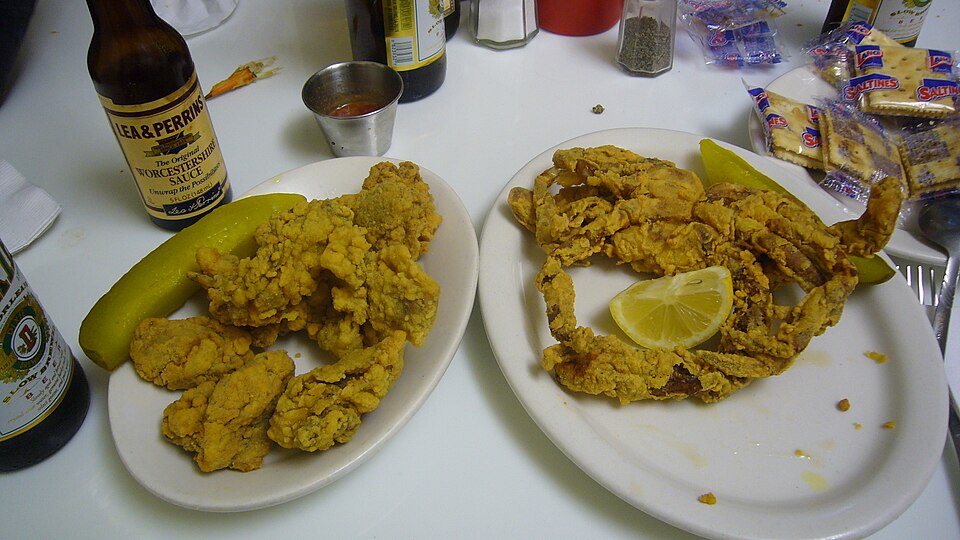 Oysters — Photo: Wikimedia CC BY-SA 3.0
Oyster and Mussel Culture
Overview
1,500 MT annual production. Filter-feeding bivalves that improve water quality. Bohol is the leading producer. Low-cost, low-maintenance aquaculture.
Species
- Philippine Oyster (Crassostrea iredalei): Most common. ₱100-200/kg. Bohol specialty.
- Green Mussel (Perna viridis): Faster growth. ₱60-120/kg. Widely available.
- Windowpane Oyster (Lopha cristagalli): Wild-harvested. Premium price.
Key Areas
- Bohol: Mabini, Ubay — largest oyster production in region
- Cebu: Olango Islands — mussel culture
- NegOr: Bais Bay — mixed bivalve culture
How to Culture Oysters
Site Selection
Shallow coastal areas (1-3 m depth). Moderate current. Away from pollution. Clean water essential for food safety.
Methods
Bottom culture: Scatter shells or concrete substrates on sea floor. Oyster larvae settle naturally. Raft/suspended: Grow on ropes or baskets hung from rafts. Higher density, easier harvest.
Growth
Harvest at marketable size (5-8 cm) in 8-12 months. No feeding required — filter natural plankton. Clean fouling organisms periodically.
Economics
Raft culture (10 sqm): Stock 500 spat. Harvest 60% = 300 oysters x 100g = 30 kg. At ₱150/kg = ₱4,500 gross. Setup cost: ₱5,000-10,000. Very low operating cost. Net: ₱2,000-3,000/year per raft. Scale to 10+ rafts for meaningful income.