High-Value Crops in Region 7
Vegetables, fruits, cacao, coffee, root crops, and spices — premium production across Central Visayas.
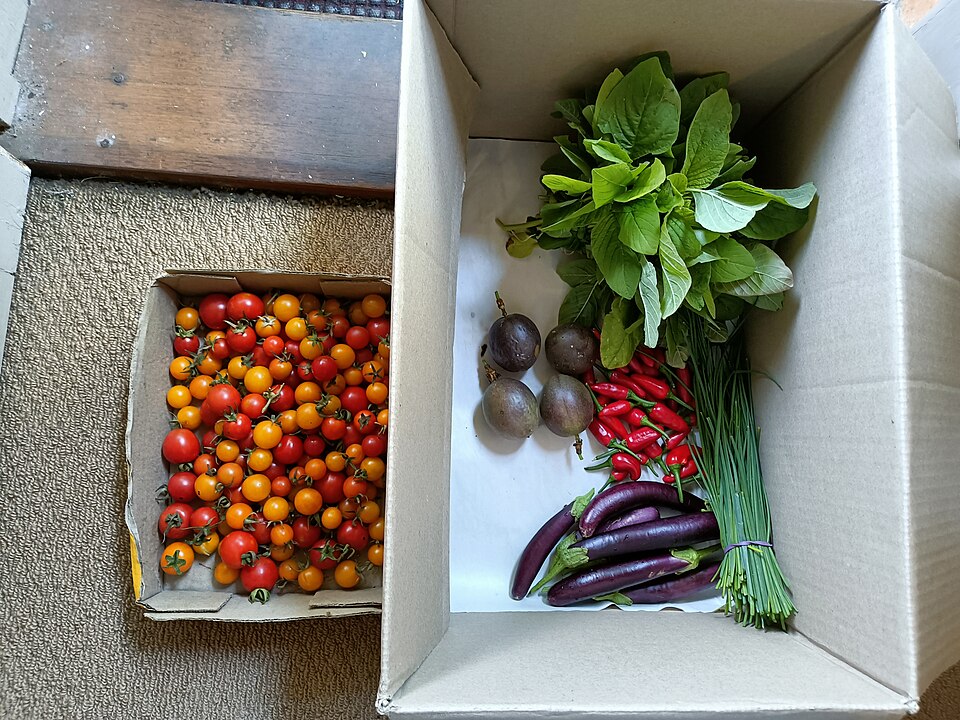 Fresh harvest — Photo: Wikimedia CC BY-SA 4.0
Vegetables
Major Vegetable Areas
- Cebu Highlands: Balamban, Asturias, Badian, Busay
- Bohol Highlands: Batuan, Bilar, Carmen, Sierra Bullones
- Negros Oriental: Valencia, Dumaguete highlands, Mabinay
Top Vegetables
| Vegetable | Local Name | Best Season | Days to Harvest |
|---|---|---|---|
| Tomato | Kamatis | Year-round | 60-75 days |
| Eggplant | Talong | Year-round | 65-80 days |
| Cabbage | Repolyo | Cool months | 60-70 days |
| Sayote | Sayote | Year-round (highlands) | Perennial |
| String Beans | Sitaw | Year-round | 45-60 days |
| Bitter Gourd | Ampalaya | Year-round | 50-65 days |
Source: DA-RFO 7, Bureau of Plant Industry, 2023
Farming Techniques
Home Garden System
Backyard gardens for household consumption — kangkong, malunggay, ampalaya, sitaw. Can reduce household food expenses by ₱2,000-5,000/month.
Sack Gardening
Innovative urban method using rice hull-filled sacks. Ideal for limited space. 20-30 plants per sack.
Protected Culture
Greenhouses, shade houses, and drip irrigation in Cebu and Negros Oriental. Reduces pest damage 60-80%.
💰 Vegetable Income
Tomato: ₱80,000-150,000 gross/ha/crop (3 crops/year possible). Cabbage: ₱60,000-100,000/ha/crop (2 crops/year). High-value crops require more labor but offer better returns than rice/corn per hectare.
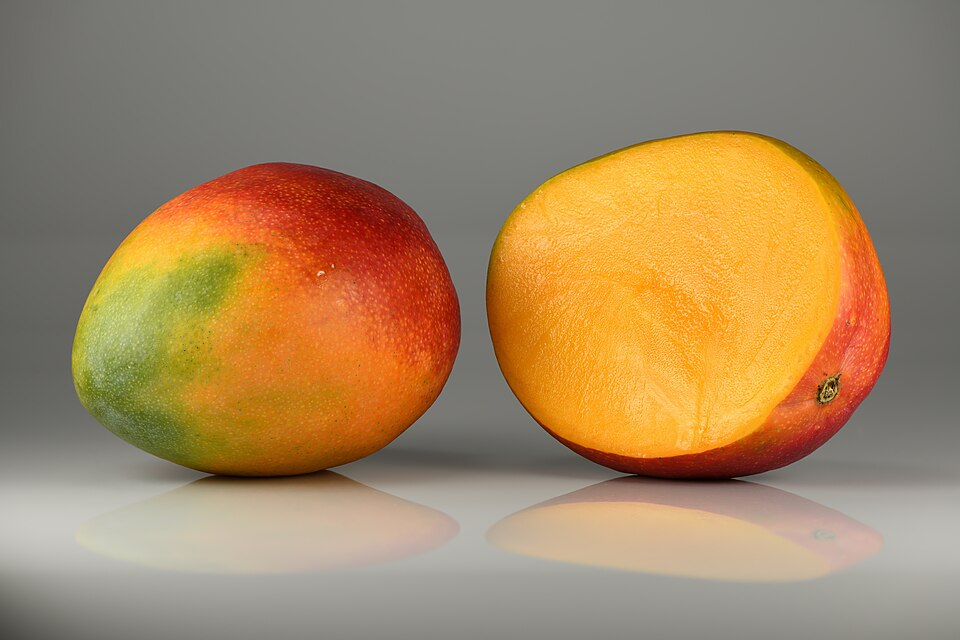 Tropical mangoes — Photo: Wikimedia CC BY-SA 4.0
Fruits
🥭 Mango
Areas: Medellin, Bogo, San Remigio (Cebu). ~8,000 ha. Varieties: Carabao (Philippine mango) — premium, sweetest. Pico — common, high yield. Harvest: April-June (peak), some off-season. Price: ₱30-80/kg (grade-dependent). Post-harvest: Harvest at "mature green" stage. Ripen with calcium carbide or ethylene. Handle gently — bruising reduces shelf life. Export: Requires BPI phytosanitary certificate. Grade A (200g+) sells for ₱60-80/kg.
🍌 Banana
Areas: Throughout Region 7. ~12,000 ha. Varieties: Saba — cooking (chips, ketchup, banana cue). Lakatan — dessert, premium. Latundan — common dessert. Income: ₱40,000-80,000/ha/year. Processing: Banana chips (₱150-250/kg), banana ketchup (₱80-120/bottle), dried banana (₱200-300/kg). Tip: Saba bananas are more profitable when processed into chips or ketchup.
🍍 Pineapple
Areas: Bohol, Negros Oriental. ~3,500 ha. Variety: Queen — small, sweet, aromatic. Harvest: 12-15 months from planting. Price: ₱12-20/piece retail, ₱15-25/kg wholesale. Processing: Fresh juice, dried pineapple (₱200-400/kg), jam. Tip: Plant at 30×60 cm spacing. Use suckers from healthy mother plants.
🍈 Papaya
Areas: Backyards throughout Region 7. ~2,800 ha. Varieties: Solo — small, sweet, export quality. Maradol — large, for local market. Harvest: 6-9 months. Quick returns. Price: ₱20-40/kg. Income: ₱50,000-80,000/ha/year. Tip: Good intercrop with young coconut or cacao. Produces fruit within 1 year while permanent crops establish.
🫒 Citrus
Calamansi, dalandan, ponkan. Concentrated in Cebu and Bohol. Calamansi: ₱50-80/kg. Growing demand for calamansi juice exports.
Other Fruits
- Lanzones, Rambutan, Atis, Guava, Santol, Balimbing (Star Fruit)
Industry Challenges
- Supply chain inefficiencies — 20-30% post-harvest loss
- Limited cold chain and processing facilities
- Climate change affecting fruiting cycles
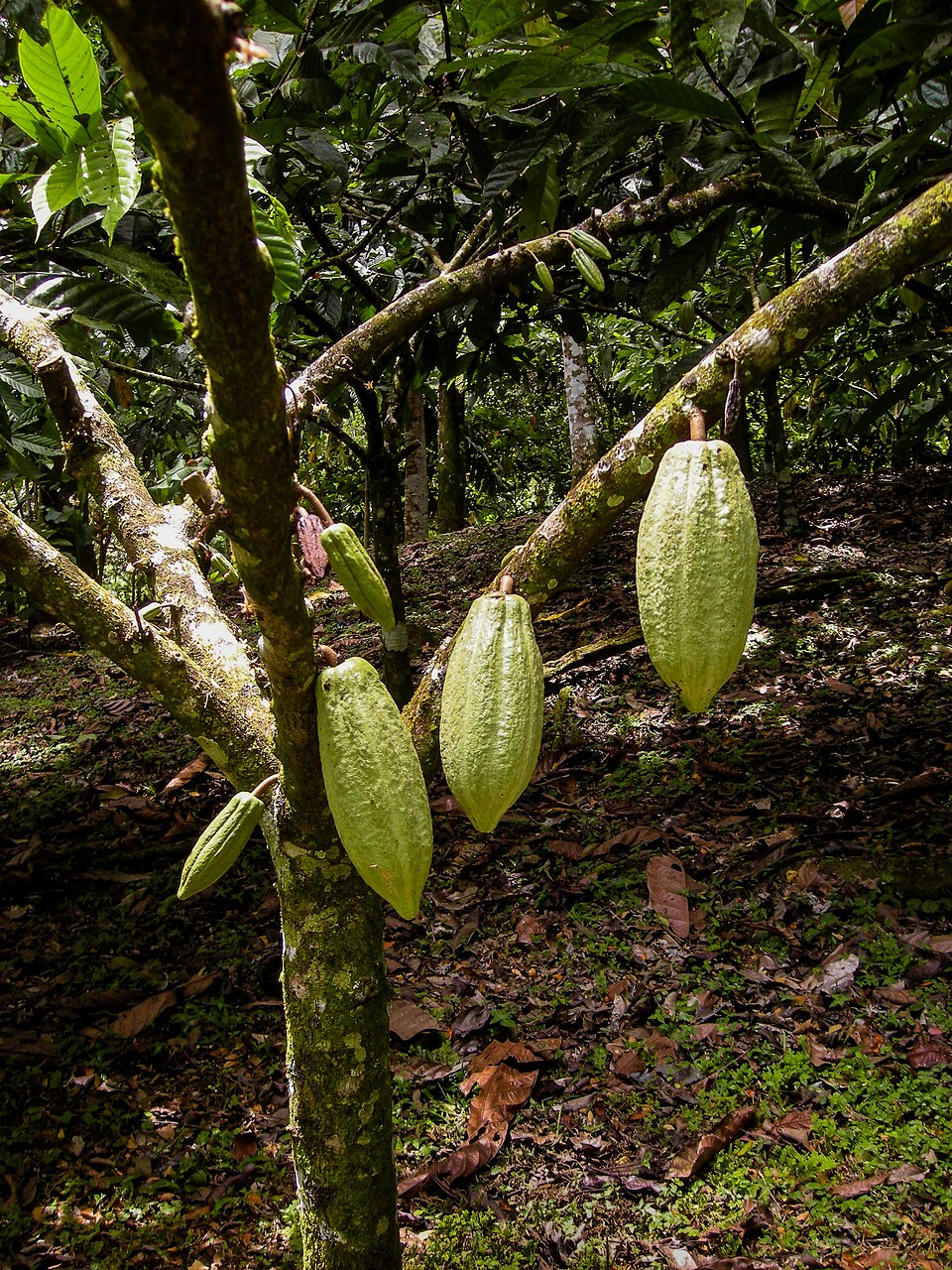 Cacao pods — Photo: Wikimedia CC BY-SA 4.0
Cacao
Overview
High-value export crop experiencing rapid growth. 9,500 hectares across Region 7. Bohol and Negros Oriental are the top producers. Cacao beans sell at ₱150-250/kg dried.
Major Growing Areas
- Bohol: Batuan, Bilar, Carmen, Sierra Bullones — premium fine-flavor cacao
- Negros Oriental: Mabinay, Valencia, Dumaguete highlands — largest volume
- Cebu: Balamban, Asturias — emerging areas
- Siquijor: Small-scale organic production
Varieties
- CCN-51: High-yielding, disease-resistant. Most planted. ₱120-180/kg dried.
- Fine Flavor (Trinitario/Criollo): Premium quality. ₱200-350/kg dried. Export market.
- BR-25: PSA-recommended hybrid. Good yield and quality balance.
Value Chain
How to Grow Cacao
Planting
3×3 m spacing (1,111 trees/ha). Shade trees required for first 2 years. Plant during rainy season (May-July). Use grafted seedlings from PCA or ATI.
Management
Prune to maintain 2 m height. Apply 50-100g NPK/tree/year. Mulch around base. Control pod borer with hygiene (remove infected pods) and Dyna-Carb spray.
Harvesting
First harvest at 2.5-3 years. Pods mature in 5-6 months. Harvest when pods turn yellow/orange (or red for some varieties). Cut with pruning hook — do NOT pull. Handle carefully to avoid damage. Harvest every 2-3 weeks during peak season.
🍫 Fermentation (Critical for Quality)
Why: Develops chocolate flavor precursors. Unfermented beans have no chocolate taste. Method: Build wooden fermentation box (1m × 1m × 0.8m, slatted bottom). Fill with beans + pulp. Cover with banana leaves. Duration: 5-7 days for fine flavor, 5-6 days for CCN-51. Turn beans: Mix every 24-48 hours (day 2, 3, 5). Temperature: Should reach 45-50°C inside. Signs of good fermentation: Beans turn brown, pulp drains away, chocolate aroma develops.
☀️ Drying
Method: Sun-dry on bamboo mats or raised drying racks. Spread beans in single layer. Turn daily. Duration: 5-7 days (depending on weather). Target: 7% moisture content (beans snap when bitten, not bend). Test: Cut a bean — should be uniformly brown inside, no purple streaks. Tip: Bring beans inside at night to avoid moisture reabsorption. Do NOT use direct fire drying — ruins flavor.
📋 Grading & Storage
Grade 1 (Premium): 100% fermented, uniform brown, no defects, 7% moisture. Sells for ₱250-350/kg. Grade 2 (Good): 80%+ fermented, minor defects. ₱150-200/kg. Grade 3 (Standard): Partially fermented, some black/broken beans. ₱80-120/kg. Storage: Clean jute sacks, cool dry area, sell within 3 months. Do NOT store in plastic — causes mold.
🍫 Chocolate Making (Value Addition)
Bean-to-Bar Process
- Roast: 120-150°C for 20-30 minutes (home oven works)
- Winnow: Crack beans, separate shells from nibs (fan or手工)
- Grind: Use meat grinder or food processor → creates chocolate liquor
- Conch: Refine 12-24 hours for smooth texture (stone grinder or melanger)
- Add sugar + cocoa butter: For dark chocolate (70%+ cacao)
- Temper: Heat to 45°C → cool to 27°C → reheat to 31°C (for glossy finish)
- Mold & Cool: Pour into molds, refrigerate 1 hour
Equipment cost: ₱150,000-500,000 (small-scale). Revenue: Dried beans ₱180/kg → Chocolate bars ₱800-1,500/kg (4-8x value). Single-origin bars from Bohol/NegOr can fetch ₱200-300 per 100g bar.
☕ Nibs & Cocoa Powder
Cacao nibs: Roasted, crushed beans. Sells for ₱500-800/kg. Used in baking, trail mix. Cocoa powder: Nibs → press to remove butter → grind remaining cake. ₱400-700/kg. Cocoa butter: Pressed from nibs. ₱800-1,200/kg. Used in cosmetics and chocolate.
Economics
Mature farm (500 trees/ha): 2-3 kg dried beans/tree/year = 1,000-1,500 kg/ha. At ₱180/kg = ₱180,000-270,000/ha/year gross. Net income: ₱100,000-180,000/ha/year. Premium fine-flavor beans fetch ₱250-350/kg. Chocolate processing adds 3-5x value.
Challenges
- Pod borer and black pod disease
- Long gestation period (3 years to first harvest)
- Need for fermentation and drying facilities
- Price volatility in global cocoa market
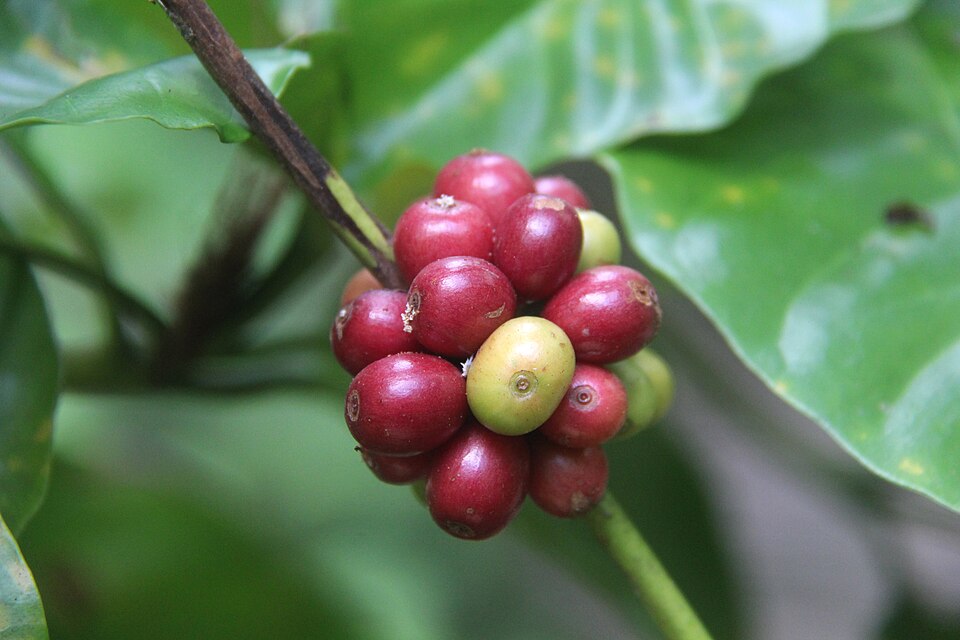 Ripe coffee berries — Photo: Wikimedia CC BY-SA 4.0
Coffee
Overview
Emerging premium crop. 7,200 hectares in Region 7. Negros Oriental and Bohol produce the best quality beans. Specialty coffee commands ₱300-800/kg green bean.
Major Growing Areas
- Negros Oriental: Valencia, Dumaguete highlands, Mabinay — Arabica and Liberica
- Bohol: Carmen, Sierra Bullones, Batuan — Robusta dominant
- Cebu: Balamban, Asturias — small-scale Arabica
Varieties
- Robusta: Most planted. Higher caffeine. ₱80-150/kg green bean.
- Liberica (Barako): Strong flavor, large bean. NegOr specialty. ₱150-300/kg.
- Arabica: Premium quality. Grown at 500+ m elevation. ₱300-800/kg specialty grade.
How to Grow Coffee
Planting
2x2 m spacing (2,500 trees/ha). Plant under coconut canopy (intercropping). Use certified seedlings from PCA or ATI. Plant at start of rainy season.
Management
Prune annually after harvest. Apply 50-100g NPK/tree. Irrigate during dry season for quality. Shade management critical for Arabica.
Harvest
Pick only red ripe cherries. Process wet or natural. Wet: depulp, ferment 12-24 hrs, wash, dry. Natural: dry whole cherry 2-3 weeks. Target: 700-1,000 kg green bean/ha.
Economics
Robusta: 1,000 kg/ha x ₱100/kg = ₱100,000/ha gross. Arabica specialty: 500-700 kg/ha x ₱400/kg = ₱200,000-280,000/ha gross. Net income: ₱50,000-150,000/ha/year depending on variety and processing quality.
Challenges
- Coffee berry borer (CBB) — major pest
- Processing facilities needed for quality
- Market access for specialty grades
- Long gestation (2-3 years to first harvest)
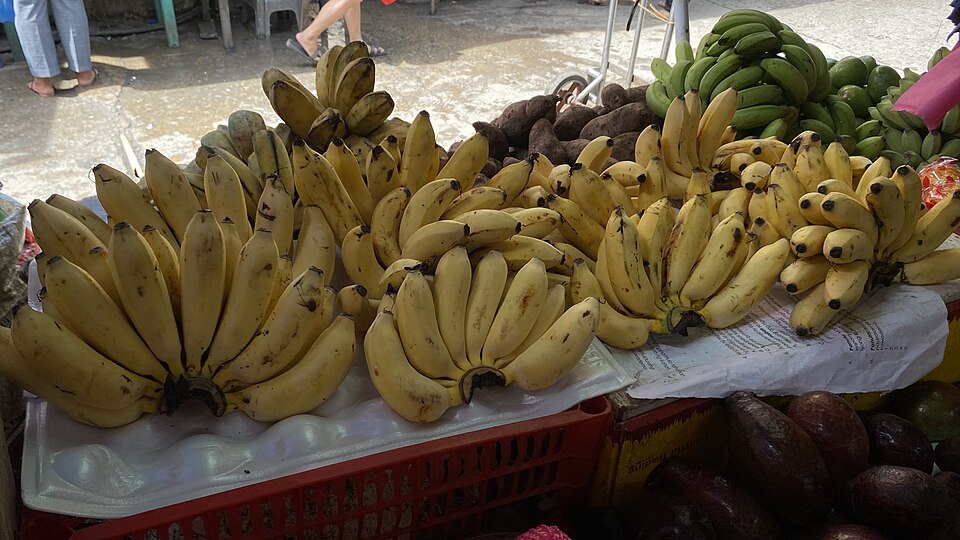 Root crops market, Toledo City — Photo: Wikimedia CC BY-SA 4.0
Root Crops
Overview
Essential food security crops. 14,000 hectares across the region. High carbohydrate content. Important for household nutrition and disaster preparedness.
Major Crops
| Crop | Local Name | Area (ha) | Yield (t/ha) |
|---|---|---|---|
| Sweet Potato | Kamote | 6,500 | 8-12 |
| Cassava | Kamoteng Kahoy | 4,200 | 10-15 |
| Taro | Gabi | 1,800 | 6-8 |
| Yam | Ube | 800 | 5-7 |
| Taro (Dasheen) | Taro | 700 | 6-9 |
Source: PSA/Crop Production Survey, 2023
Major Areas
- Siquijor: 8,000 ha — largest root crop producer per hectare in region
- Bohol: Sierra Bullones, Carmen — kamote and cassava
- NegOr: Mabinay, Valencia — gabi and ube
How to Grow Sweet Potato (Kamote)
Planting
Plant vine cuttings 25x100 cm apart. Use 10,000-15,000 cuttings/ha. Plant at onset of rains. Varieties: Orange-flesh (Vitamin A), White, Purple (Ube).
Management
Weed at 30 and 60 days. Apply compost or complete fertilizer at planting. No irrigation needed (rain-fed). 4-6 months to harvest.
Other Root Crops
Cassava (Kamoteng Kahoy)
Plant stem cuttings 1x1 m. Harvest at 8-12 months. Yield: 10-15 tons/ha. Uses: Fresh eating, chips, starch, ethanol feedstock. Processing: Fresh → peel → grate → extract starch (wash and settle) → dry → cassava flour/starch. Cassava chips: Slice → sun-dry 2-3 days → ₱8-12/kg. Starch production: 1 ton fresh cassava → 200-250 kg starch. Starch price: ₱25-40/kg. Income: ₱80,000-120,000/ha (starch processing). Tip: Sell to tapioca factories or starch processors for better prices than fresh.
Taro (Gabi)
Plant corms or suckers 60x60 cm. 8-12 months to harvest. Leaves and corms both edible. Important in Filipino cuisine (laing, gabi dishes).
Ube (Purple Yam)
Plant tubers or vine cuttings. 6-8 months to harvest. Premium ingredient for ube halaya and desserts. ₱80-150/kg fresh. High demand in urban markets.
Economics
Kamote: ₱15-25/kg retail. 10 t/ha x ₱20/kg = ₱200,000/ha gross. Very low input cost. Cassava: ₱8-12/kg. Starch processing adds value. Ube: Premium pricing. 5 t/ha x ₱100/kg = ₱500,000/ha gross (high value but small area).
Challenges
- Sweet potato weevil — major pest
- Limited processing facilities for cassava starch
- Perishability — short shelf life
- Low market price for fresh root crops
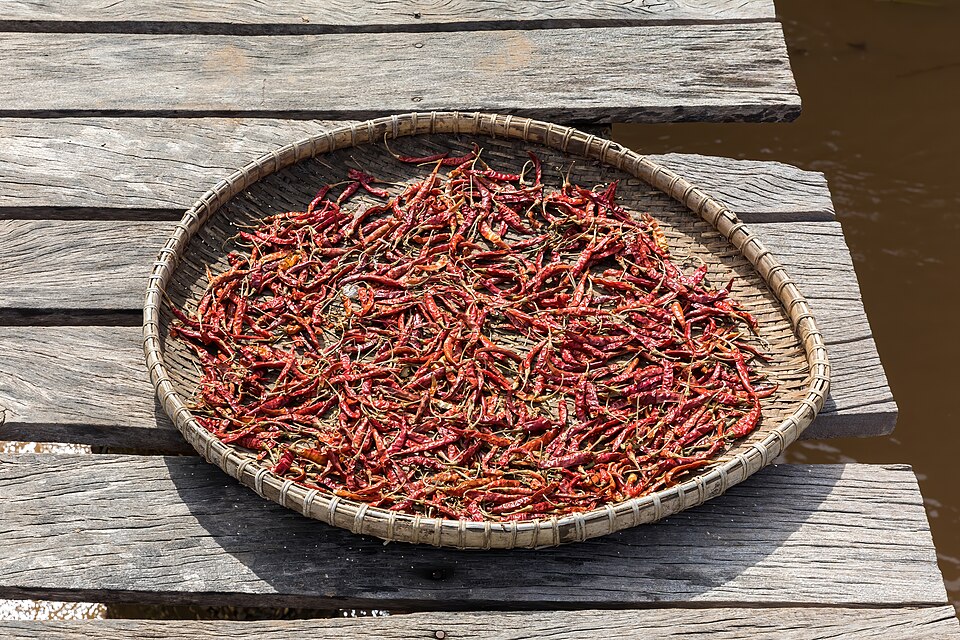 Chili peppers drying — Photo: Wikimedia CC BY-SA 4.0
Spices and Medicinals
Overview
High-value, low-input crops grown in backyards and small farms. Growing demand from food processing and herbal medicine industries.
Key Spices
| Spice | Local Name | Price/kg | Best Season |
|---|---|---|---|
| Chili (Siling Labuyo) | Siling Labuyo | ₱150-300 | Year-round |
| Ginger | Luya | ₱60-100 | Year-round |
| Turmeric | Dilaw | ₱80-120 | Year-round |
| Black Pepper | Paminta | ₱200-400 | Year-round |
| Onion | Sibuyas | ₱40-80 | Cool months |
| Garlic | Bawang | ₱60-120 | Cool months |
Major Areas
- Bohol: Batuan, Bilar — chili and ginger
- NegOr: Valencia, Dumaguete — turmeric and ginger
- Cebu Highlands: Balamban — black pepper on areca nut
How to Grow Chili (Siling Labuyo)
Planting
Start seeds in nursery, transplant at 30 days. Spacing: 30x60 cm (55,000 plants/ha). Can be intercropped with corn or coconut.
Management
Water regularly. Side-dress with fertilizer at flowering. Scout for fruit borer and aphids. Regular picking encourages continuous fruiting.
Harvest
Pick when fully red. Yield: 2-4 tons/ha over 6-8 month harvest period. Can produce year-round with irrigation.
How to Grow Ginger (Luya)
Planting
Plant seed rhizomes 25x30 cm, 5 cm deep. 40,000 plants/ha. Shade recommended. Plant before rainy season.
Harvest
8-10 months to maturity. Yield: 8-15 tons/ha. Fresh ginger: ₱60-100/kg. Dried ginger: ₱200-300/kg.
How to Grow Black Pepper
Planting
Climbing vine. Plant on living supports (areca nut, coconut). Spacing: 2x2 m. Takes 2-3 years to first harvest.
Harvest
Harvest when berries turn red-black. Yield: 2-4 kg dried pepper/vine/year. Price: ₱200-400/kg dried peppercorns.
Economics
Chili: 3 t/ha x ₱200/kg = ₱600,000/ha gross. Very high value but labor-intensive. Ginger: 10 t/ha x ₱80/kg = ₱800,000/ha gross. Good returns with low inputs. Black pepper: Perennial — one planting produces for 15-20 years.
Medicinal Plants
- Lagundi (Vitex negundo): Cough and asthma remedy. DA promotes cultivation.
- Yerba Buena (Mentha): Pain relief. Easy to grow in backyards.
- Guava (Bayabas): Wound cleaning, diarrhea. Grows wild, also cultivated.
- Moringa (Malunggay): Nutritional supplement. Fast-growing, high demand.