Sustainable Agriculture in Region 7
Building resilient farming systems that protect the environment, sustain livelihoods, and ensure food security.
🌱 What is Sustainable Agriculture?
Sustainable agriculture integrates three core goals: environmental stewardship, economic profitability, and social equity. In Region 7, where 65% of farms are under 2 hectares and rainfall is increasingly unpredictable, sustainable practices are not just ideal — they are essential for long-term viability.
🌍 Environmental
Protect soil health, conserve water, preserve biodiversity, reduce chemical pollution, and mitigate climate change impacts.
💰 Economic
Lower input costs over time, diversify income sources, access premium markets (organic, fair trade), and build climate resilience.
👥 Social
Ensure food security, support farmer livelihoods, promote community cooperation, and preserve indigenous farming knowledge.
⚖️ The 5 Principles of Sustainable Agriculture for Region 7
1. Minimize Soil Disturbance
Reduce or eliminate tillage. Leave crop residues on the surface. Preserves soil structure, organic matter, and earthworm populations. Reduces erosion on hilly terrain common in Bohol and Cebu.
2. Maximize Soil Cover
Keep soil covered year-round with living plants or mulch. Prevents erosion from heavy monsoon rains, suppresses weeds, conserves moisture, and feeds soil microorganisms.
3. Maximize Diversity
Crop rotation, intercropping, and agroforestry. Diverse systems are more resilient to pests, diseases, and climate shocks. Mimics natural ecosystems.
4. Integrate Livestock
Combine crop and animal production. Animal manure becomes fertilizer; crop residues become feed. Reduces waste and closes the nutrient loop.
5. Optimize Inputs
Right source, right rate, right time, right place. Match inputs to actual crop needs through soil testing. Eliminate waste and reduce costs and environmental impact.
📊 Sustainable Agriculture in Region 7 — By the Numbers
| Indicator | Current Status | Target (2030) | Key Driver |
|---|---|---|---|
| Organic farms (certified) | ~450 farms / 2,800 ha | 1,500 farms / 10,000 ha | RA 10068, PGS certification |
| Agroforestry adoption | ~12,000 ha | 25,000 ha | DENR, DA-ATI training |
| No-till / minimum tillage | ~8% of rice area | 25% of rice area | RCEF, SRI promotion |
| Cover cropping | ~5,000 ha | 15,000 ha | Legume market development |
| Soil organic matter (avg) | 1.8% | 2.5% | Composting, cover crops |
| Water use efficiency (rice) | 1,200 L/kg rice | 800 L/kg rice | AWD, drip irrigation |
| Farm income (sustainable) | +20-30% vs. conventional | +40-50% vs. conventional | Diversification, premiums |
Sources: DA-RFO 7, PSA, ATI Region 7, PhilRice — 2023 estimates
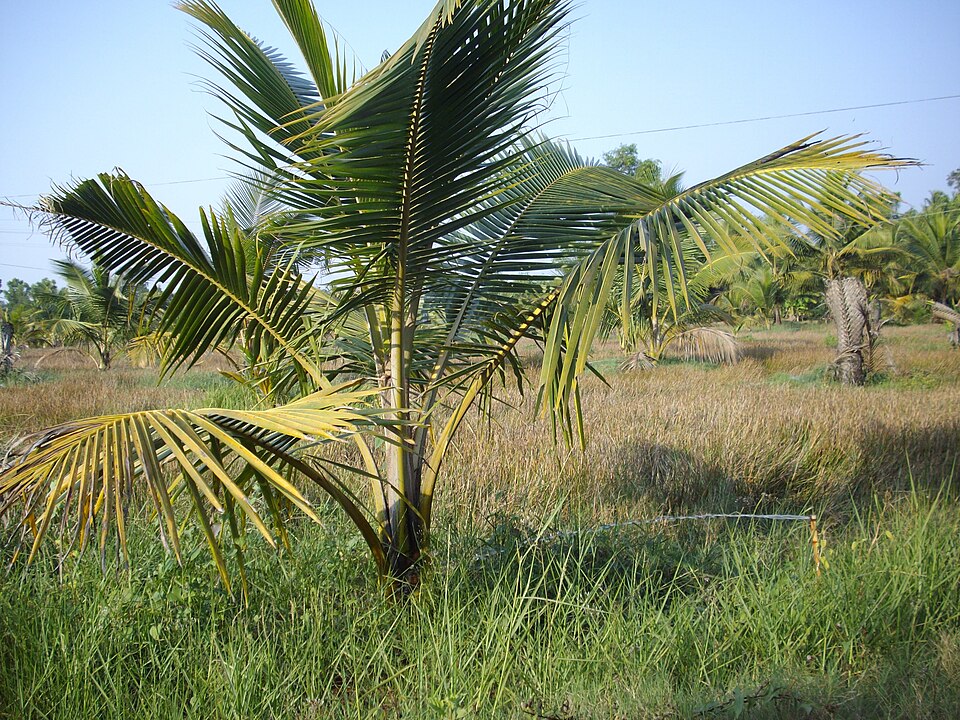 Agroforestry system — Photo: Wikimedia CC BY-SA 3.0
Agroforestry Systems in Region 7
Combining trees, crops, and livestock on the same land for diversified income, environmental protection, and climate resilience.
🌾 Alley Cropping
Trees planted in rows with crops grown between them. Trees provide shade, windbreaks, and additional income.
How It Works
Plant rows of fast-growing trees (e.g., ipil-ipil, narra, mahogany) 10-15 m apart. Grow annual crops (rice, corn, vegetables) between rows. Prune tree branches to provide mulch and green manure.
Recommended Species for Region 7
Nitrogen-fixing: Leucaena leucocephala (ipil-ipil), Gliricidia sepium (madre de cacao), Flemingia. Timber: Narra, mahogany, gmelina. Fruit: Cacao, coffee, calamansi.
Economics
Year 1-3: Crop income only (₱35,000-50,000/ha). Year 4-7: Timber harvest begins (₱200,000-500,000/ha depending on species). Year 5+: Total income ₱60,000-120,000/ha/year from combined crops + prunings + timber reserves.
Best for: Medium-sized farms (3-10 ha) in hilly areas of Bohol, Cebu, and Negros Oriental.
🏔️ SALT (Sloping Agricultural Land Technology)
Developed by Bureau of Soils and Water Management (BSWM). Ideal for the hilly terrain of Region 7.
How It Works
Contour hedgerows of nitrogen-fixing shrubs (ipil-ipil or leucaena) planted every 4-5 m along slopes. Crops grown on terraces between hedgerows. Prunings used as mulch and animal feed.
Steps to Establish
1. Mark contour lines (A-frame level). 2. Plant hedgerow species at 50 cm spacing. 3. Maintain hedgerows by pruning every 4-6 weeks. 4. Plant crops between rows once hedgerows are established (6-12 months). 5. Rotate crops: legumes → vegetables → root crops.
Economics
Setup cost: ₱15,000-25,000/ha (one-time). Reduces soil erosion by 80-90%. Green manure from pruning replaces 30-50% of fertilizer needs (saves ₱3,000-5,000/ha/year). Livestock feed from prunings adds ₱5,000-10,000/year. Land value increases.
Best for: Farms on slopes >5% gradient. Available through BSWM and DA-RFO 7.
🐄 Integrated Tree-Crop-Livestock
Combining fruit/nut trees with pasture and livestock for maximum resource use.
System Design
Plant fruit trees (cacao, coconut, calamansi) at wider spacing. Establish improved pasture (Guinea grass, Napier) between trees. Raise cattle, goats, or native chicken under tree canopy. Animal manure fertilizes trees. Tree prunings supplement animal feed.
Example: Cacao-Coconut-Cattle
120 coconut trees/ha + 400 cacao trees/ha + 2-3 cattle. Income streams: Copra ₱40,000 + cacao ₱120,000 + cattle ₱30,000 = ₱190,000/ha/year total. Compare to coconut-only: ₱40,000-60,000/ha/year.
Benefits
Trees provide shade for heat-sensitive crops (cacao, coffee). Livestock provide manure (free fertilizer). Diversified income reduces risk. Improved animal weight gain under shade (10-15% faster). Carbon sequestration: 5-15 tCO₂/ha/year.
🏡 Boundary & Homegarden Systems
Maximizing unused spaces around farms and homes for food production and income.
Boundary Planting
Plant fruit trees (calamansi, banana, papaya, coconut) along farm boundaries. Provides windbreaks, live fences, and additional income. Calamansi: ₱50-80/kg, productive for 20+ years.
Homegarden
Diverse multi-story system around the house: tall trees (coconut, fruit trees) + medium shrubs (cacao, coffee) + ground crops (vegetables, root crops) + vines (squash, bitter gourd). Can provide 50-70% of household food needs. Reduces food expenses by ₱3,000-8,000/month.
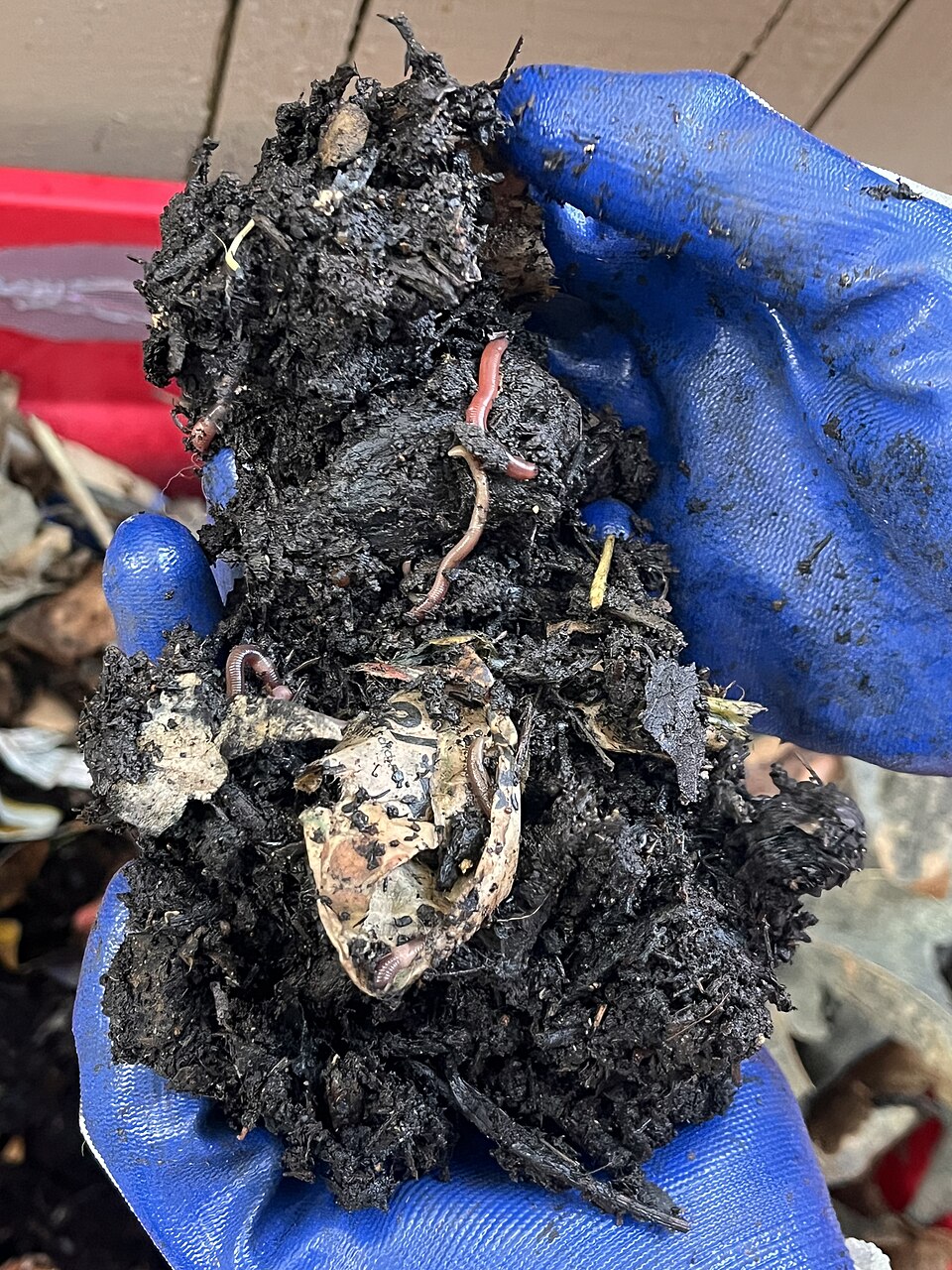 Vermicomposting — Photo: Wikimedia CC BY-SA 4.0
Soil Health & Conservation Agriculture
Healthy soil is the foundation of sustainable farming. Region 7 soils vary widely — know your soil, build its health.
📊 Soil Health Indicators for Region 7
| Indicator | Poor | Fair | Good | Excellent | How to Test |
|---|---|---|---|---|---|
| Soil Organic Matter | <1% | 1-2% | 2-3% | >3% | DA Soils Lab Cebu (free) |
| Soil pH | <5.0 | 5.0-5.5 | 5.5-6.5 | 6.5-7.0 | pH meter or kit (₱200-500) |
| Earthworm Count | 0-5/m² | 5-15/m² | 15-30/m² | >30/m² | Dig 30cm cube, count |
| Water Infiltration | <15 min | 15-30 min | 30-60 min | >60 min | Ring infiltrometer test |
| Aggregate Stability | Collapses | Partially | Holds shape | Strong clumps | Visual: wet soil in hand |
♻️ Composting & Vermiculture
Traditional Composting
Layer carbon materials (rice straw, dried leaves, coconut husks) with nitrogen materials (fresh green weeds, kitchen scraps, animal manure). Turn every 2 weeks. Ready in 2-3 months. Target ratio: 30:1 C:N.
Vermicomposting
Use African Nightcrawlers (ANC) to process organic waste into high-quality fertilizer. Setup: Concrete or bamboo pit (2m × 1m × 0.5m). ₱3,000-5,000 setup. Input: 500g worms + organic waste (vegetable peels, manure). Output: 1-2 kg vermicast/day. Sell at ₱20-40/kg or use on farm.
Impact on Soil
Compost increases soil organic matter by 0.1-0.3% per year. Improves water-holding capacity by 20-40%. Reduces fertilizer need by 25-50%. One cubic meter of compost covers 0.5 ha at 2 t/ha application rate.
🔥 Biochar Technology
What is Biochar?
Charcoal produced by heating organic materials (rice hull, coconut shell, wood) in low-oxygen conditions. When added to soil, it remains stable for hundreds of years, permanently improving soil structure.
How to Make Biochar
1. Burn rice hulls or coconut shells in a sealed drum (kon-tiki or TLUD design). 2. Quench with water or compost tea when black and brittle. 3. Charge by soaking in urine, manure tea, or compost extract for 1 week. 4. Apply at 1-5 t/ha. Cost: ₱5,000-15,000/ha (one-time, lasts 50+ years).
Benefits
Increases water retention by 15-25%. Reduces nutrient leaching by 30-50%. Raises pH of acidic soils. Provides habitat for beneficial microbes. Carbon sequestration: 2-5 tCO₂/ha. In Region 7, abundant rice hull supply makes biochar very cost-effective.
🌱 Cover Cropping & Green Manure
Best Cover Crops for Region 7
Mungbean (monggo): Fixes 50-80 kg N/ha. Market price: ₱50-80/kg. Dual-purpose: cover crop + cash crop. Cowpea: Fixes 60-100 kg N/ha. Fast-growing (45-60 days). Good livestock feed. Sunn hemp: Fixes 100-150 kg N/ha. Biomass: 3-5 t/ha. Excellent green manure. Calopo: Native legume. Self-seeding, perennial ground cover.
Cover Crop Benefits
Reduces erosion by 60-90%. Fixes 50-150 kg N/ha (saves ₱2,500-7,500/ha in fertilizer). Suppresses weeds (reduces herbicide costs ₱1,000-2,000/ha). Feeds soil organisms. Improves soil structure. Breaks pest cycles when rotated.
Seasonal Rotation
Dry season (Mar-Jul): Cash crop (rice/corn). Transition (Jul-Aug): Plant mungbean or cowpea. Wet season (Aug-Dec): Rice or corn with cover crop residue. Off-season (Jan-Feb): Sunn hemp green manure. This rotation maintains soil cover year-round.
🚜 Conservation Tillage
Minimum Tillage for Rice
Reduce plowing from 2-3 passes to 1 pass or zero-till. Use the System of Rice Intensification (SRI): transplant younger seedlings (8-12 days), wider spacing, alternate wetting and drying. Yield impact: +10-30% over conventional. Cost savings: ₱5,000-8,000/ha (less tractor rental).
No-Till for Corn
Plant directly into stubble or residue without plowing. Use jab planter or no-till seeder. Retain crop residues as mulch. Benefits: Saves ₱5,000-8,000/ha in land preparation. Reduces erosion 70-90%. Builds soil organic matter 0.1-0.2%/year.
Residue Management
After harvest, chop rice straw and leave on field (do not burn). Chop corn stalks and spread as mulch. Residue decomposes in 30-60 days, adding 0.5-1 t/ha of organic matter. Feeds earthworms and soil microbes.
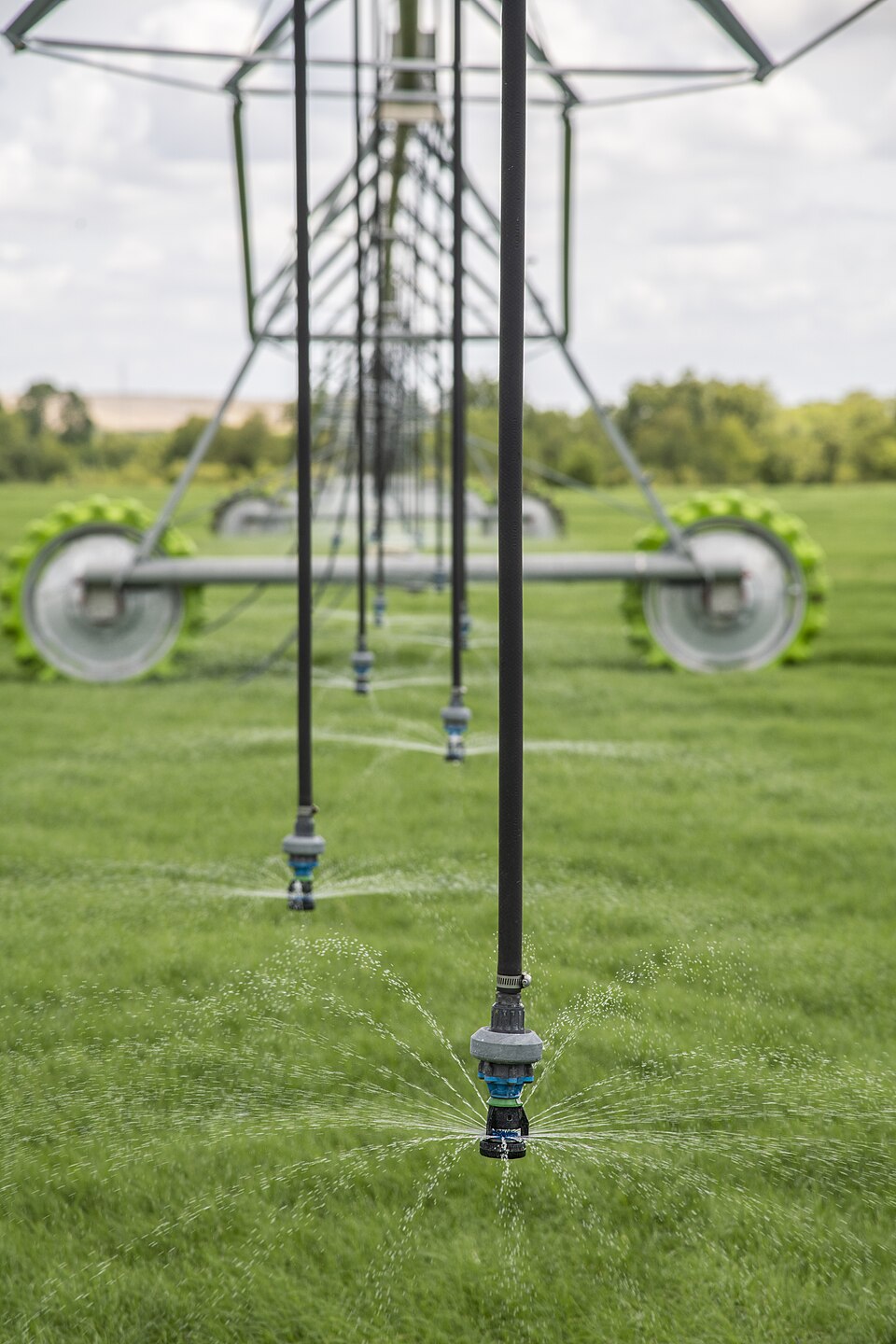 Drip irrigation — Photo: Wikimedia USDA PD
Sustainable Water Management
Water is Region 7's most critical farming constraint. Sustainable practices can reduce water use 30-50% while maintaining or improving yields.
🌾 Alternate Wetting and Drying (AWD)
How It Works
Flood rice field to 5 cm, then allow to drain naturally. When water level drops 15 cm below soil surface (check with perforated pipe), re-flood. Repeat throughout the growing season. Saves 15-30% water with no yield loss.
Setup & Cost
Perforated pipe (₱50-100): install at field corner. Training: free via PhilRice or DA-RFO 7. Savings: ₱2,000-4,000/ha/season in irrigation fees. Reduces methane emissions by 30-50% (qualifies for carbon credits).
Adoption in Region 7
PhilRice and IRRI have trained 5,000+ farmers in AWD. Bohol and Negros Oriental show best adoption. Combined with SRI methods, water savings reach 40-50%.
🌧️ Rainwater Harvesting
Types for Region 7
Farm ponds: 10m × 10m × 2m deep. Stores 200 m³ (enough for 0.5 ha dry-season crop). Cost: ₱50,000-100,000. Rooftop collection: 100 m² roof × 1m rainfall = 100,000 liters/year. Cost: ₱15,000-30,000 (gutters + tank). SWIP (Small Water Impounding Project): Community-scale. Apply via NIA.
Impact
Farm ponds enable dry-season cropping (additional ₱30,000-50,000/ha income). Reduces dependency on communal irrigation. Provides water for livestock during drought. Can be stocked with fish for additional income.
⚡ Solar-Powered Irrigation
System Components
Solar panels (300-500W) + submersible pump + controller + drip/sprinkler system. Total cost: ₱80,000-150,000 for 0.5 ha system. Payback period: 3-5 years vs. diesel pumping.
Advantages
No fuel cost (sun is free). Low maintenance. Works in remote areas without electricity. 15-20 year panel lifespan. Can power other farm equipment. Available through: DA-BSWM, NIA, cooperative financing.
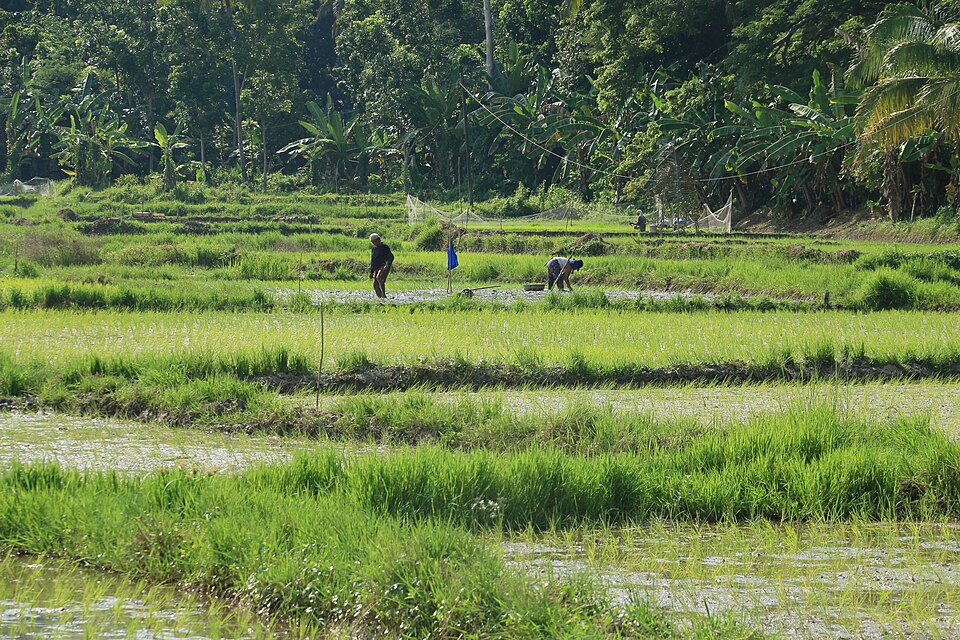 Climate-smart rice terraces, Bohol — Photo: Wikimedia CC BY-SA 4.0
Climate-Smart Agriculture
Adapting to climate change while reducing agriculture's contribution to greenhouse gas emissions.
🔄 Greenhouse Gas Reduction Practices
| Practice | GHG Reduced | Reduction | Carbon Credit Potential |
|---|---|---|---|
| AWD (rice) | Methane (CH₄) | 30-50% | ₱500-2,000/ha/year |
| Composting | Methane + N₂O | 20-40% | Indirect (input reduction) |
| Biochar application | CO₂ (sequestration) | 2-5 tCO₂/ha/year | ₱1,000-3,000/ha/year |
| Agroforestry | CO₂ (sequestration) | 5-15 tCO₂/ha/year | ₱3,000-10,000/ha/year |
| No-till / reduced till | CO₂ (fuel + soil) | 0.5-1.5 tCO₂/ha/yr | ₱300-1,000/ha/year |
| Cover cropping | N₂O + CO₂ | 10-30% | Indirect |
Carbon credit prices: ₱500-1,500/tCO₂e (voluntary market, 2023). Voluntary Carbon Markets Initiative (VCMI) and Philippine Carbon Market Alliance developing frameworks.
🛡️ Climate Adaptation Strategies
Flood-Resilient Farming
Use Sub1 rice varieties (survives 2 weeks submergence). Build raised seedbeds. Install drainage canals. Diversify into floating gardens (hydroponics on bamboo rafts). PCIC insurance for flood protection (₱57/ha).
Drought-Resilient Farming
Plant drought-tolerant varieties (NSIC Rc 160 Halag for rice, drought-tolerant corn hybrids). Mulching reduces evaporation 30-50%. Rainwater harvesting for supplemental irrigation. Deep-rooted perennials (coconut, cacao) more resilient than annuals.
Typhoon-Resilient Farming
Windbreaks reduce crop damage 20-40%. Plant trees along prevailing wind direction. Short-duration varieties allow harvest before peak typhoon season (Sep-Nov). Stagger planting dates to spread risk. Crop insurance (PCIC) essential.
Sustainable Certification & Premium Markets
Certification opens premium markets and connects farmers to buyers willing to pay more for sustainably produced goods.
🌱 Organic Certification
PGS (Participatory Guarantee System)
Philippines' alternative to expensive third-party certification. Free through cooperatives. Peer-reviewed: farmers inspect each other's farms. Recognized by DA under RA 10068. Requirements: No chemical inputs for 3 years. Record-keeping. Join certified PGS group.
Third-Party Certification
For export markets. Accredited certifiers: OCIA, OneCert, BCS. Cost: ₱50,000-150,000/year. Required for organic export to US, EU, Japan. Premium: 50-200% above conventional prices.
Organic Premium in Region 7
Rice: ₱40-60/kg (vs. ₱25-30 conventional). Vegetables: ₱50-100/kg (vs. ₱20-40 conventional). Cacao (organic fine-flavor): ₱300-500/kg (vs. ₱150-200 conventional). Coffee (organic specialty): ₱500-1,500/kg roasted.
🌍 Other Certifications
Fair Trade
Ensures minimum prices + social premium for community development. Available for coffee, cacao, coconut, banana. Applied via Fairtrade International or Fair Trade USA. Premium: 10-20% above market price + ₱0.20/kg social premium.
Rainforest Alliance
Focuses on biodiversity conservation and sustainable livelihoods. Available for cacao, coffee, banana, tea. Cost: ₱30,000-80,000/year. Required by many European buyers. Premium: 10-30% above conventional.
SusGAP (Philippine Good Agricultural Practices)
National GAP certification for safety and quality. Required for supermarket supply chains. Cost: ₱20,000-50,000. Required for PCIC premium crop insurance. Applied via DA-BPI.
💰 Carbon Farming Opportunities
Emerging Carbon Markets
Philippine Carbon Market Alliance (PCMA) is developing frameworks for agricultural carbon credits. Key projects: rice AWD programs, agroforestry reforestation, composting/biochar. Expected timeline: Operational markets by 2025-2026.
How to Prepare
1. Implement carbon-reducing practices (AWD, composting, agroforestry). 2. Keep detailed records (input use, water use, tree count). 3. Join cooperatives for collective carbon credit trading. 4. Register with PCMA or DA for future programs. 5. Consider voluntary carbon platforms (Verra, Gold Standard).
Estimated Revenue
A 5 ha farm implementing AWD + agroforestry + composting could generate ₱15,000-50,000/year in carbon credits. While currently modest, prices are expected to rise as markets mature. This is income on top of regular farm production.
Economic Analysis of Sustainable Practices
Sustainable agriculture is not just environmentally sound — it makes economic sense. Here is the data for Region 7.
📊 Cost-Benefit Comparison: Conventional vs. Sustainable (Rice, per ha per crop)
| Cost Item | Conventional | Sustainable | Savings |
|---|---|---|---|
| Seeds | ₱2,000 | ₱1,500 (saved seed) | ₱500 |
| Fertilizer (chemical) | ₱10,000 | ₱5,000 (compost + green manure) | ₱5,000 |
| Pesticide | ₱2,500 | ₱1,000 (IPM + resistant varieties) | ₱1,500 |
| Labor | ₱15,000 | ₱13,000 (less spraying, no tillage) | ₱2,000 |
| Land preparation | ₱8,000 | ₱3,000 (minimum tillage) | ₱5,000 |
| Irrigation | ₱3,000 | ₱2,000 (AWD, mulching) | ₱1,000 |
| Total Cost | ₱40,500 | ₱25,500 | ₱15,000 (37% less) |
| Yield (t/ha) | 3.2 | 3.5 (SRI/AWD) | +0.3 t/ha |
| Revenue (@₱25/kg) | ₱80,000 | ₱87,500 | +₱7,500 |
| Net Income | ₱39,500 | ₱62,000 | +₱22,500 (57% more) |
Based on DA-RFO 7 and PhilRice demonstration farm data, 2023. Sustainable practices compound benefits over time as soil health improves.
📈 5-Year Income Projection: Conventional vs. Diversified Sustainable Farm (3 ha)
| Year | Conventional (Rice only) | Sustainable (Rice + Corn + Cacao + Goats) | Difference |
|---|---|---|---|
| Year 1 | ₱118,500 | ₱95,000 (establishment costs) | -₱23,500 |
| Year 2 | ₱118,500 | ₱145,000 (first cacao harvest) | +₱26,500 |
| Year 3 | ₱118,500 | ₱210,000 (cacao matures + goats) | +₱91,500 |
| Year 4 | ₱118,500 | ₱285,000 (full production) | +₱166,500 |
| Year 5 | ₱118,500 | ₱350,000 (cacao peak + timber) | +₱231,500 |
| 5-Year Total | ₱592,500 | ₱1,085,000 | +₱492,500 (83% more) |
Projection assumes 1 ha rice (2 crops) + 0.5 ha corn + 0.5 ha cacao (300 trees) + 0.5 ha pasture (5 goats). Actual results vary by management skill and market conditions.
🔑 Key Economic Insights
Lower Input Costs
Sustainable farms spend 25-40% less on external inputs (fertilizer, pesticide, fuel) by using on-farm resources: compost, green manure, biological control, and conservation tillage.
Diversified Income
Multiple income streams reduce risk. If one crop fails (typhoon, pest), others sustain the farm. Average income stability improves 40-60% with diversification.
Premium Market Access
Organic, fair trade, and specialty certifications command 20-200% price premiums. Region 7's fine-flavor cacao and specialty coffee are especially well-positioned.
Long-Term Soil Investment
Each year of sustainable practices increases soil organic matter 0.1-0.3%. Over 10 years, this translates to 20-40% higher yields with the same inputs. Soil is your most valuable asset.