Livestock Industry in Region 7
Cattle, carabao, poultry, swine, goats, ducks, quail, and beekeeping across Central Visayas.
📊 Livestock Population Overview
Source: PSA/Livestock and Poultry Survey, 2023
🐄 Population Distribution
🐔 Poultry Segments
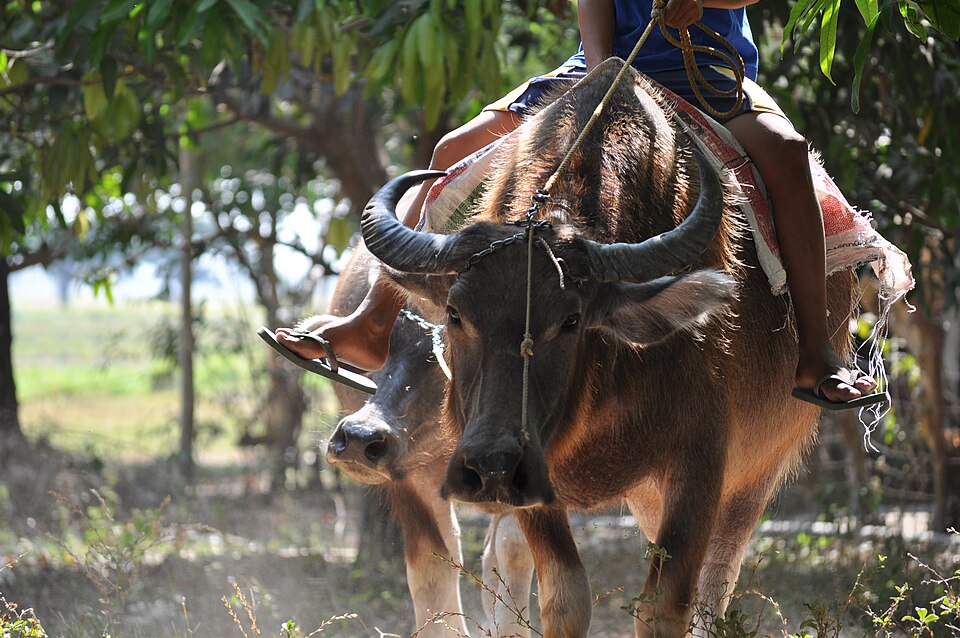 Cattle farming — Photo: Wikimedia CC BY-SA 3.0
Cattle Raising
Industry Overview
One of the most important livestock activities. 420,000 head across the region. Negros Oriental and Bohol are top producers.
Cattle Population
| Province | Population | Purpose |
|---|---|---|
| Negros Oriental | 155,000 | Beef & Draft |
| Bohol | 135,000 | Beef & Draft |
| Cebu | 110,000 | Beef |
| Siquijor | 20,000 | Beef & Draft |
| Total | 420,000 |
Source: PSA/Livestock Survey, 2023
🐄 Cattle by Province
Breeds Comparison
| Breed | Origin | Weight | Best For | Price |
|---|---|---|---|---|
| Santander | Cebu native | 200-300 kg | Draft, heat tolerance | ₱35,000-45,000 |
| Philippine Native | Various | 180-280 kg | Hardy, low-input | ₱30,000-40,000 |
| Brahman Cross | Imported genetics | 350-500 kg | Beef, drought-resistant | ₱55,000-80,000 |
| Texel Cross | Imported | 400-550 kg | Beef, fast growth | ₱60,000-85,000 |
| Jersey Cross | Imported | 300-400 kg | Dairy (low yield) | ₱50,000-70,000 |
Tip: For fattening, Brahman or Texel crosses grow faster. For draft, native breeds are more practical.
⚖️ Breed Weight & Price
Raising Systems
Pastoral System
Semi-intensive. Animals graze on communal pasturelands, sheltered at night. Low input cost: ₱100-150/head/day for supplemental feed.
Feedlot Design
Pen size: 4-5 sqm/head (10-15 head per pen). Flooring: Concrete with 2% slope for drainage, or compacted earth with rice hull bedding. Feed trough: 60 cm wide × 100 cm/head, concrete or wood. Water trough: 10 liters/head capacity, automatic refilling preferred. Shade: Roofed area (50% of pen). Drainage: Sloped floor → collection pit → biogas or compost. Fencing: 1.2 m high, bamboo or steel pipe. Setup cost: ₱3,000-5,000/head for complete facility.
Feedlot Operations
Commercial fattening for 3-6 months. Corn silage, rice straw, concentrate. Feed cost: ₱150-200/head/day. Target weight gain: 0.8-1.2 kg/day. Capacity: 10-50 head for small-scale, 100+ for commercial.
Feeding Guide (Fattening)
| Feed Component | Amount/Head/Day | Cost/Day |
|---|---|---|
| Corn silage | 8-10 kg | ₱40-50 |
| Rice straw | 3-5 kg | ₱10-15 |
| Concentrate | 2-3 kg | ₱60-90 |
| Mineral salt | 50g | ₱5 |
| Total Feed Cost | ₱115-160/head/day |
💰 Daily Feed Cost Breakdown
💰 Fattening Economics
90-day program: Buy 200 kg stocker at ₱55,000. Feed cost: ₱135/day × 90 = ₱12,150. Sell at 300 kg × ₱230/kg = ₱69,000. Gross profit: ₱1,850/head. Scale to 20+ heads for meaningful income. Mortality risk: 2-5%.
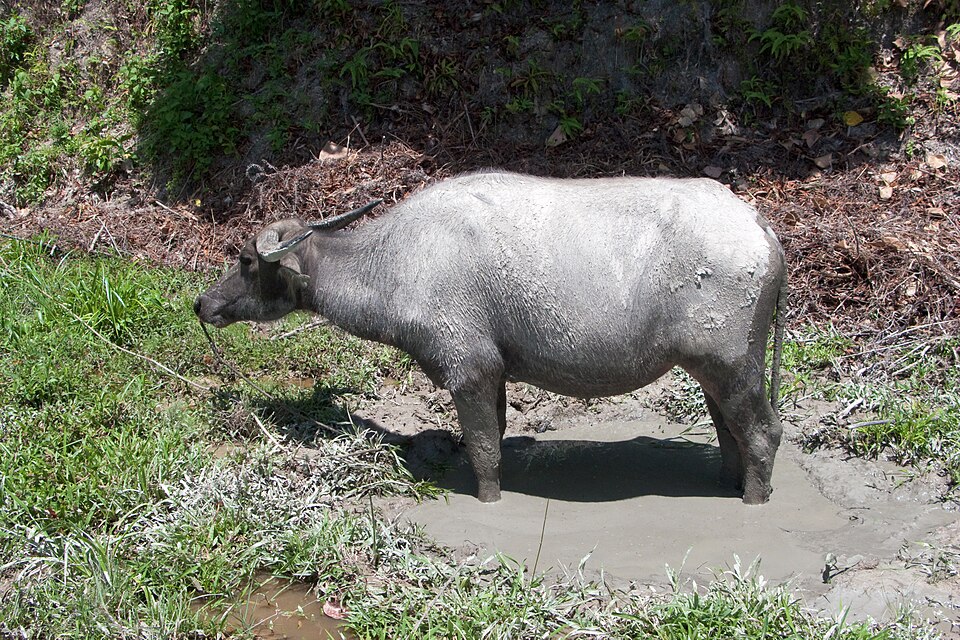 Carabao, Palawan — Photo: Wikimedia CC BY 4.0
Carabao (Water Buffalo)
Overview
185,000 head. Essential for rice cultivation. Used for draft power, dairy (Murrah crosses), meat (carabeef), and manure.
| Province | Population |
|---|---|
| Negros Oriental | 68,000 |
| Bohol | 55,000 |
| Cebu | 52,000 |
| Siquijor | 10,000 |
| Total | 185,000 |
Source: PSA/Livestock Survey, 2023
PHILCARBEP
Government program for dairy carabao development. Murrah × native crosses for milk, yogurt, cheese. Contact BAI-Region 7 for AI services.
Health Management
- Vaccination: Hemorrhagic septicemia (June yearly), FMD (as scheduled)
- AI services: Free via PHILCARBEP stations
- Nutrition: 10-15 kg grass + 2 kg concentrate/day for dairy carabao
💰 Dairy Carabao Income
Murrah cross yields 4-6 liters/day. Milk price: ₱50-80/liter. Monthly income per head: ₱6,000-14,000. Higher than draft use but requires daily milking and better nutrition.
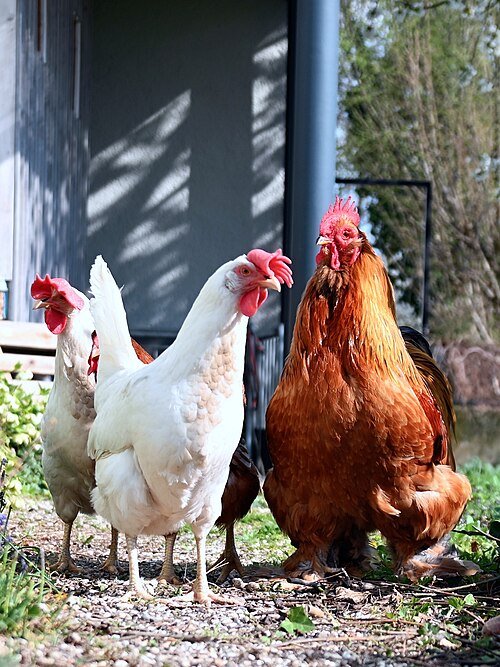 Backyard poultry — Photo: Wikimedia CC BY-SA 4.0
Poultry Production
Overview
Most commercially developed subsector. ~18 million total population.
| Segment | Population | Key Areas |
|---|---|---|
| Broilers | 8,500,000 | Cebu, NegOr |
| Layers | 3,200,000 | Cebu, NegOr |
| Native Chicken | 4,800,000 | All provinces |
| Ducks | 850,000 | Bohol, NegOr |
| Quail | 650,000 | Cebu, NegOr |
Source: PSA/Livestock Survey, 2023
Commercial Broilers
Integrators (Bounty Fresh, San Miguel Foods) contract growing. 35-42 day cycles. Guaranteed buyer. Slaughter weight: 1.8-2.2 kg.
Native Chicken
"Manok Bisaya" — premium taste. ₱180-280/kg live weight vs. ₱65-85/kg broiler. Growing semi-intensive farming.
💰 Poultry Income
Broiler (100 heads): Chick cost ₱5,000 + Feed ₱15,000 + Medicines ₱1,500 = ₱21,500. Revenue: 100 × 2 kg × ₱75 = ₱15,000. Contract growing: ₱20-30 profit/chick. Native (50 heads): Lower input, higher margin per bird but slower growth (5-6 months to market).
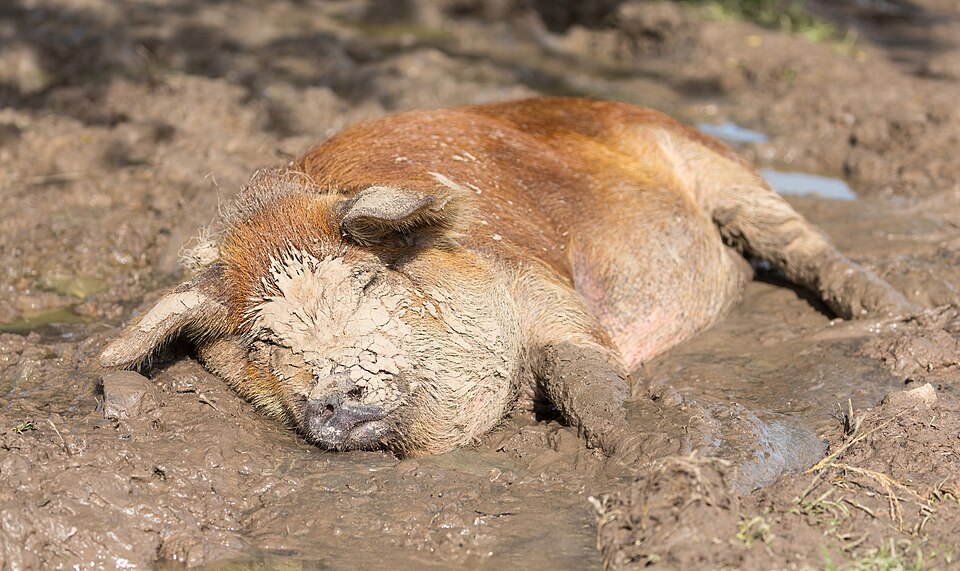 Swine farming — Photo: Wikimedia CC BY-SA 4.0
Swine Production
Overview
1.2 million head. Pork is the most consumed meat in the Philippines.
| Province | Population | Type |
|---|---|---|
| Cebu | 420,000 | Mixed |
| Negros Oriental | 380,000 | Mixed |
| Bohol | 320,000 | Mainly backyard |
| Siquijor | 80,000 | Mainly backyard |
Source: PSA/Livestock Survey, 2023
🐷 Swine by Province
Backyard (~65%)
2-10 heads. Kitchen scraps + commercial feeds. Lower biosecurity. Vulnerable to ASF.
Commercial
100-5,000 head. Confinement, AI, precision feeding. Landrace, Large White, Duroc breeds.
Feeding Guide (Growing-Finishing)
| Stage | Weight | Feed/Day | Days |
|---|---|---|---|
| Nursery | 10-25 kg | 0.8-1.2 kg | 35-42 |
| Grower | 25-60 kg | 2.0-2.5 kg | 60-70 |
| Finisher | 60-100 kg | 3.0-3.5 kg | 55-65 |
⚠️ ASF Prevention Protocol
Biosecurity Checklist
- ✅ No visitors to piggery — ever. Zero tolerance.
- ✅ Foot bath at entrance — 2% sodium hydroxide or chlorine
- ✅ No kitchen scraps — cook feed for 30 min at 70°C minimum
- ✅ No contact with other pigs — neighboring farms, wild pigs
- ✅ Clean vehicles — disinfect before entering farm premises
- ✅ Boot change — separate boots inside vs. outside piggery
- ✅ Quarantine new pigs — 21 days before mixing with herd
- ✅ Carcass disposal — burial (2m deep + lime) or incineration. NEVER sell dead pigs.
If you suspect ASF: Call BAI immediately: (02) 8928-1171. Do NOT move animals. Do NOT sell. Do NOT feed scraps to other pigs. Report to Municipal Veterinarian. There is NO vaccine and NO treatment — prevention is everything.
Other Health Concerns
- ⚠️ Classical Swine Fever — Vaccinate at 3 months, booster annually
- ⚠️ Rising feed costs — corn price directly impacts profitability
- ⚠️ Heat stress — provide ventilation, sprinklers above 30°C
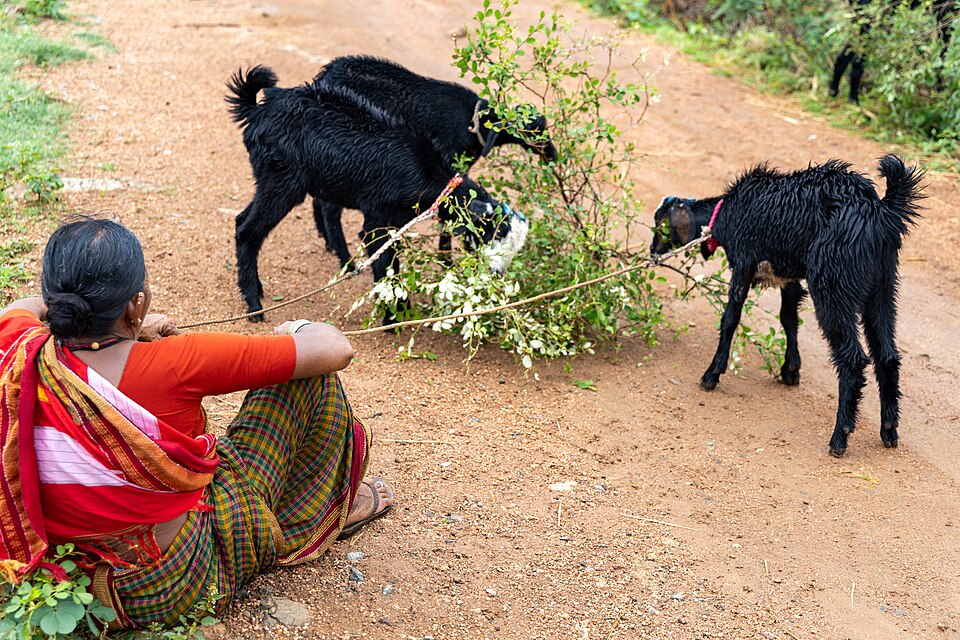 Goat farming — Photo: Wikimedia CC BY-SA 4.0
Goat Raising
Overview
280,000 head. Primarily for chevon (goat meat). Some dairy emerging.
| Province | Population |
|---|---|
| Negros Oriental | 105,000 |
| Bohol | 85,000 |
| Cebu | 75,000 |
| Siquijor | 15,000 |
Source: PSA/Livestock Survey, 2023
Backyard System
Tethered on pasture. Ipil-Ipil feed. 1-2 kids per kidding, 2 kiddings/year. Low input cost.
Feeding
Goats need 3-5 kg forage/day + 0.3-0.5 kg concentrate. Feed cost: ₱30-50/head/day. Browse species: ipil-ipil, leucaena, camote tops, madrecacao.
💰 Goat Income
Start with 3 does (₱15,000-25,000). Each produces 2 kids/year × 2 kiddings = 4 kids/doe/year. Sell kids at 4-5 months at ₱3,000-5,000/head. Annual revenue from 3 does: ₱36,000-60,000. Meat price: ₱200-280/kg dressed weight.
Opportunities
- Growing chevon demand (Lechon de Leche)
- Low initial investment vs. cattle
- 6-8 months to market weight (25-30 kg)
- Goat dairy emerging in Bohol and NegOr
🐟 Aquaculture & Fisheries
Milkfish, tilapia, shrimp, seaweed, grouper, mud crab, and oyster farming in Region 7.
Explore Aquaculture →Milkfish (Bangus)
Overview
The most popular aquaculture species in Region 7. 18,000 MT annual production. Versatile — raised in ponds, pens, and cages. National fish of the Philippines.
Production Systems
Pond Culture
Traditional method. 0.5-2 ha ponds. Stocking: 5,000-10,000 fingerlings/ha. Harvest at 250-350g in 4-6 months. Feed: commercial pellets + natural food. Cost: ₱30,000-50,000/ha/crop.
Cage Culture
Higher density. 5x5x3 m cages. Stocking: 50-80 fingerlings/cage. Harvest at 250-350g in 3-4 months. Used in lakes and coastal areas. Feed cost: ₱150-200/fingerling to harvest.
Pen Culture
Enclosed shallow areas. 0.5-5 ha pens. Natural food supplementation. Lower feed cost but vulnerable to typhoons.
How to Raise Milkfish
Site Selection
Brackish water (15-32 ppt salinity). Tidal flow for water exchange. Away from pollution sources. Good soil for pond construction.
Stocking
Fingerlings: 2-3 inch (5-8 cm). Source from BFAR hatcheries or certified private hatcheries. Acclimate slowly (30-60 min floating bag method). Stock in early morning.
Feeding
Commercial bangus pellets (28-32% protein). Feed 3-5% of body weight/day, split into 2-3 feedings. Adjust based on consumption. Supplement with rice bran or duckweed in ponds.
Harvest
Harvest at 250-350g (6-8 months). Use seine nets or drain harvesting. Debone for boneless bangus: premium price ₱200-300/kg vs. ₱80-120 whole.
Products
- Whole bangus: ₱80-120/kg — wet market staple
- Boneless bangus: ₱200-300/kg — premium product, daing,relleno
- Smoked bangus (Tinapa): ₱150-250/kg — traditional preserved product
- Smoked dried bangus (Daing): ₱180-280/kg — shelf-stable
Economics
Pond (1 ha): Stock 8,000 fingerlings. Harvest 70% survival = 5,600 fish x 300g = 1,680 kg. At ₱100/kg = ₱168,000 gross. Cost: ₱80,000-100,000. Net: ₱68,000-88,000/ha/crop. 2 crops/year possible.
Duck Farming
Overview
850,000 ducks across Region 7. Bohol and Negros Oriental are the top producers. Ducks are raised for eggs (balut, salted egg, fresh duck eggs) and meat (peking-style, native duck).
Population by Province
| Province | Population | Main Products |
|---|---|---|
| Bohol | 320,000 | Balut, salted egg, fresh eggs |
| Negros Oriental | 280,000 | Fresh eggs, dressed duck |
| Cebu | 180,000 | Fresh eggs, dressed duck |
| Siquijor | 70,000 | Fresh eggs, backyard |
| Total | 850,000 |
Source: PSA/Livestock and Poultry Survey, 2023
Varieties
- Khaki Campbell: Best layer. 250-300 eggs/year. Popular for egg production.
- Commercial White (White Pekin cross): Fast growth. Meat-type. 45-50 days to market.
- Native Duck (Itik): Hardy, disease-resistant. Lower egg production but premium meat price.
- Runner Duck: Good foragers. Pest control in rice paddies.
Raising Systems
Backyard (Scavenging)
Free-range during day, housed at night. Feed on snails, insects, rice bran. Low cost: ₱10-15/duck/day. 100-500 ducks typical. Egg production: 60-70%.
Semi-Intensive
Pond access + supplemental feeds. 1,000-5,000 ducks. Better egg production: 75-85%. Feed cost: ₱25-35/duck/day.
Commercial (Confined)
Indoor housing with controlled environment. 5,000+ ducks. Highest egg production: 85-90%. Feed cost: ₱30-40/duck/day.
Feeding Guide
| Stage | Age | Feed/Day | Type |
|---|---|---|---|
| Duckling | 0-2 weeks | 20-30g | Starter crumbles (22% CP) |
| Growing | 3-6 weeks | 50-80g | Grower pellets (18% CP) |
| Layer | 18+ weeks | 120-150g | Layer mash (16-18% CP) |
| Meat Duck | 4-7 weeks | 100-180g | Finisher (16% CP) |
🥚 Egg Products & Processing
🥚 Balut Production (Bohol's Specialty)
What: Fertilized duck egg incubated 14-18 days until embryo develops. Price: ₱8-15/pc retail. Process:
- Candle eggs: Use bright light to check fertility (80%+ should be fertile)
- Incubate: 37-38°C, 60-70% humidity, turn eggs 3x daily. Use forced-air incubator (₱15,000-30,000 for 500 eggs).
- Day 14-18: Check development — embryo should be visible. Day 17 is most popular (half-developed).
- Package: Wrap in newspaper, sell fresh or boil briefly (10 min) for longer shelf life.
- Sell: Roadside stalls, wet markets, balut specialty stores.
Tip: Bohol balut commands premium prices due to quality reputation. Margin: ₱5-8 profit per egg. 500 ducks x 200 balut eggs/month = ₱10,000-16,000/month additional income.
🧂 Salted Egg Processing
What: Duck eggs preserved in salt brine or charcoal-salt mixture. Price: ₱12-20/pc retail, ₱150-200/dozen. Two Methods:
- Brine method (faster): Dissolve 1 kg salt in 1 liter water. Submerge eggs in brine. Store in cool place 18-21 days. Wash and dry.
- Charcoal method (traditional): Mix equal parts charcoal dust and salt. Moisten slightly. Wrap each egg in mixture. Store 20-30 days. Wash and dry. Produces darker yolk, richer flavor.
Yield: 100 eggs → 100 salted eggs in 3 weeks. Profit: ₱5-8/egg. Shelf life: 1-2 months unrefrigerated.
🥚 Fresh Duck Egg Sales
Price: ₱10-15/pc (larger than chicken eggs — 70-80g vs 55-60g). Market: Wet markets, direct to consumers, baking supply stores. Packaging: Trays of 30 eggs. Tip: Fresh duck eggs are preferred by bakeries for leche flan and noodles — approach local bakers for bulk orders.
💰 Dried Salted Egg Yolk (Premium Product)
What: Salted egg yolks dried and cured — specialty ingredient for Chinese cuisine and pastries. Process: Separate yolks from salted eggs → air-dry or dehydrate → vacuum pack. Price: ₱200-300/kg (₱50-80/100g retail). Market: Chinese restaurants, pastry shops, online specialty stores. Export potential: Growing demand in Hong Kong, Taiwan, Singapore.
💰 Economics
Income Comparison (500 ducks, layer flock)
| Product | Volume/Year | Price | Gross Income |
|---|---|---|---|
| Fresh eggs | 100,000 | ₱12/pc | ₱1,200,000 |
| Balut (20% of eggs) | 20,000 | ₱12/pc | ₱240,000 |
| Salted eggs (15% of eggs) | 15,000 | ₱15/pc | ₱225,000 |
| Duck meat (culled birds) | 100 birds | ₱300/bird | ₱30,000 |
Feed cost: ₱30 x 500 ducks x 300 days = ₱4,500,000. Other costs: Housing, labor, vaccines = ₱500,000. Total cost: ₱5,000,000. Net income: ₱150,000-300,000/year (scale matters — profit margins improve with 1,000+ ducks). Key: Balut and salted eggs have higher margins than fresh eggs — diversify products!
Challenges
- Duck viral hepatitis — vaccinate at 1 day old
- Duck plague (erysipelas) — annual vaccination
- Water quality management critical
- Odor and waste management in confined systems
Quail Farming
Overview
650,000 quail across Region 7. Primarily for egg production. Cebu and Negros Oriental are the main producers. Small footprint, high protein, fast returns.
Population by Province
| Province | Population | Primary Product |
|---|---|---|
| Cebu | 280,000 | Fresh quail eggs |
| Negros Oriental | 200,000 | Fresh quail eggs |
| Bohol | 120,000 | Fresh quail eggs |
| Siquijor | 50,000 | Fresh quail eggs |
| Total | 650,000 |
Source: PSA/Livestock and Poultry Survey, 2023
Varieties
- Japanese Quail (Coturnix japonica): Most common. 300-320 eggs/year. Small body (100-140g live weight).
- Pharaoh: Slightly larger. Brown speckled plumage. Popular in Philippines.
- Texan White: White shell eggs. Premium appearance. Growing market.
🏠 Housing Design & Construction
Battery Cage Design (Recommended)
Dimensions per unit: 100 cm long × 45 cm deep × 25 cm high per tier. Stack 3-4 tiers high. Floor: Galvanized wire mesh (12mm × 12mm) — allows droppings to fall through. Feed trough: Front-mounted, 10 cm wide × 100 cm long. Water: Nipple drinker or trough with drip tray. Egg collection: Sloped floor (8° angle) — eggs roll to front tray. Capacity: 20-25 birds per cage. Material cost: ₱500-800/cage unit. DIY build: Bamboo frame + galvanized wire mesh = ₱300-500/unit.
📐 Colony Cage Design (Budget Option)
Dimensions: 100 cm long × 60 cm deep × 40 cm high. Holds 40-50 birds. Floor: Bamboo slats (1 cm gap) or wire mesh. Roof: Corrugated GI sheet or tarpaulin. Feed trough: Wooden trough, front-mounted. Water: 1-liter bottle inverted with nipple. Drop pan: Tray underneath for easy cleaning. Cost: ₱200-400/unit (bamboo) or ₱800-1,200 (galvanized). Best for: 50-500 bird backyard operations.
🌡️ Ventilation & Environment
Ideal temperature: 18-25°C (quail lay best at 20-22°C). Ventilation: Cross-ventilation windows on both sides. In tropical climate: ensure airflow but avoid direct drafts. Lighting: 14-16 hours light/day for layers (install 2-5W LED bulb per cage). Dark period: Minimum 8 hours darkness for rest. Humidity: 50-65% — use ventilation or dehumidifiers if needed. Heat stress: Above 30°C, egg production drops. Use fans, wet curtains, or shade cloth.
💧 Feeding & Watering
Feed: Commercial layer mash (16-18% CP). 15-20g/bird/day. Cost: ₱3-5/bird/day (₱90-150/bird/month). Water: Clean, fresh daily. Nipple drinkers preferred (less contamination). Grit: Provide crushed oyster shell or limestone (5g/bird/week) for eggshell quality. Feed schedule: 2x daily (morning + late afternoon). Tip: Feed consumption = 40-50% of body weight per day.
🥚 Egg Collection & Grading
Collection: 2-3 times daily (morning, noon, evening). Handle gently — quail eggs are fragile. Egg size: 9-12g each (50-60 eggs = 500g). Grading: Sort by size: Large (>10g), Medium (9-10g), Small (<9g). Storage: Room temperature: 7-10 days. Refrigerated: 30+ days. Pointy end down. Packaging: Trays of 30 eggs. Grading table:
| Size | Weight | Price/pc | Use |
|---|---|---|---|
| Large | >10g | ₱3.50-4.00 | Fresh market, restaurants |
| Medium | 9-10g | ₱2.50-3.00 | Street food, boiled eggs |
| Small | <9g | ₱1.50-2.00 | Processing, salted eggs |
🥚 Breeding Management
Sexing: Males have reddish-brown breast, females have speckled brown. Ratio: 1 male : 3-4 females for breeding. Incubation: 17-18 days at 37.5°C, 60% humidity. Turn eggs 3x daily. Hatching rate: 75-85% if fertile. Chick rearing: Brooder at 35°C first week, reduce 2°C/week. Starter feed for 3 weeks. Point of lay: 6-7 weeks. Peak production: Weeks 8-40. Cull at: 52-60 weeks (production drops below 70%).
Quail Egg Products
- Fresh quail eggs: ₱2-4/pc retail. Pack in trays of 30.
- Boiled quail eggs: ₱3-5/pc. Popular street food and snack.
- Salted quail eggs: ₱4-6/pc. Preserved in salt brine. Year-round demand.
- Quail meat: ₱150-250/kg dressed. Delicacy in some restaurants.
Economics
1,000 laying quail: 1,000 x 300 eggs x 85% = 255,000 eggs/year. At ₱3/egg = ₱765,000 gross. Feed cost: ₱4 x 1,000 x 300 = ₱1,200,000. Net income: ₱100,000-200,000/year. Startup cost: ₱30,000-50,000 (cages + 500 pullets at ₱30-50/bird). ROI: 6-12 months.
Challenges
- Quail viral hepatitis — vaccinate at 1 week
- Heat stress — provide ventilation in tropical climate
- Egg breakage — proper cage design essential
- Market fluctuation — prices vary ₱1.50-5/egg seasonally
Beekeeping (Apiculture)
Overview
Growing industry in Region 7. Honey production, pollination services, and value-added products (beeswax, propolis, royal jelly). Cebu and Bohol lead adoption.
Bee Species in Region 7
- Apis mellifera (Western Honey Bee): Most productive. 20-40 kg honey/hive/year. Requires modern hive management.
- Apis cerana (Asian Honey Bee): Native species. 5-10 kg honey/hive/year. Adapted to tropical climate. Disease-resistant.
- Tetragonula biroi (Stingless Bee): Native stingless bee. 1-3 kg honey/hive/year. Premium honey ₱500-1,000/kg. Growing specialty market.
Major Areas
- Cebu: Balamban, Asturias — Apis mellifera and stingless bee farms
- Bohol: Carmen, Batuan — Apis cerana and stingless bee
- NegOr: Valencia, Dumaguete highlands — Apis cerana
How to Start Beekeeping
🔧 Langstroth Hive Design (Apis mellifera)
Standard dimensions: 46.7 cm × 38.1 cm (outer dimensions). Components (bottom to top):
- Stand: 4 legs, 45-60 cm high. Keeps hive off ground. Cost: ₱500-1,000
- Bottom board: Entrance reducer, landing board. 5 cm × 30 cm entrance.
- Deep super (brood box): 10 frames. 24.4 cm high. Queen breeds here. NEVER harvest this honey.
- Queen excluder: Metal/plastic grid. Keeps queen in brood box.
- Medium super(s): 1-2 boxes. 16.8 cm high. 10 frames each. This is where honey is stored.
- Inner cover: Ventilation, insulation. Has feeding hole.
- Outer cover (telescoping): Metal-topped roof. Protects from rain.
Frame size: 44.8 cm × 23.2 cm (deep), 44.8 cm × 15.9 cm (medium). Foundation: Wax or plastic foundation sheets for bees to build comb. Total cost: ₱3,000-5,000 per complete hive. DIY: Philippine mahogany plywood = ₱1,500-2,500.
🐝 Stingless Bee Hive (Tetragonula biroi)
Log hive (traditional): Hollow log or coconut trunk, 30-40 cm diameter × 50-60 cm long. Cost: Free (if available) or ₱500-1,000. Modern box: 30 cm × 30 cm × 30 cm wooden box with internal divisions. Propolis entrance tube. Cost: ₱1,000-2,000. Internal structure: Brood area (center), honey pots (sides), pollen pots (around brood). Harvest: Cut honey pots from box edges. Do NOT remove brood area. 1-3 kg honey/hive/year. Premium price: ₱500-1,000/kg — tastes tangy, fruity.
📍 Hive Placement Guide
| Factor | Recommendation | Why |
|---|---|---|
| Facing | East or Southeast | Morning sun warms hive, stimulates foraging |
| Height | 45-60 cm off ground | Prevents flooding, ant access |
| Shade | Partial shade (afternoon) | Prevents overheating in tropical climate |
| Water | Within 100 m | Bees need water for cooling and honey dilution |
| Forage | Within 3 km radius | Bees forage up to 3 km from hive |
| Distance | 100+ m from livestock | Avoids disturbance from animal smells |
| Flight path | Unobstructed | Bees need clear takeoff/landing path |
📅 Management Calendar
| Month | Activity | Notes |
|---|---|---|
| Jan-Mar | Build-up, early honey flow | Feed sugar syrup if colony is weak |
| Apr-Jun | Main honey harvest | Harvest after major nectar flow |
| Jul-Sep | Swarm season, Varroa check | Inspect for queen cells, treat mites |
| Oct-Dec | Build-up for next season | Feed, combine weak colonies |
🛠️ Essential Equipment
- Bee suit + veil: ₱500-1,500 (protects from stings)
- Smoker: ₱300-800 (calms bees during inspection)
- Hive tool: ₱100-300 (prying frames apart)
- Bee brush: ₱100-200 (gentle frame clearing)
- Extractor: ₱5,000-15,000 (manual) or ₱20,000+ (electric) — can share among beekeepers
- Strainer + bottling tank: ₱1,000-3,000
- Wax foundation: ₱50-100/sheet (25 sheets per deep frame)
🐝 How to Harvest Honey
- Check readiness: 80%+ of cells should be capped (white wax covering)
- Choose timing: Late morning when most foragers are out
- Smoke hive: 2-3 puffs at entrance, then under inner cover
- Remove super: Brush off bees or use fume board (bee escape)
- Uncap cells: Use uncapping knife or fork to slice wax caps
- Extract: Place frames in extractor, spin to throw out honey
- Filter: Strain through 200-mesh sieve to remove wax particles
- Bottle: Pour into clean, dry bottles. Label with date and source
Yield: 2-5 kg/hive/harvest. 2-3 harvests/year. Important: Always leave enough honey for the bees — 2-3 kg minimum for colony survival.
Products and Value
- Raw Honey: ₱300-800/kg (Apis mellifera), ₱500-1,000/kg (stingless bee)
- Beeswax: ₱300-500/kg. Used in cosmetics, candles, food wraps.
- Propolis: ₱2,000-5,000/kg. Herbal supplement, immune booster.
- Royal Jelly: ₱5,000-10,000/kg. Premium health product.
- Pollination Service: ₱500-1,000/hive/season. Contract for mango, coconut, vegetable farms.
Economics
5-hive starter (Apis mellifera): 5 hives x 30 kg honey/year = 150 kg. At ₱500/kg = ₱75,000/year gross. Startup cost: ₱25,000-35,000. Net income: ₱40,000-60,000/year. Stingless bee (10 hives): 10 x 2 kg = 20 kg. At ₱800/kg = ₱16,000/year. Lower volume but premium pricing.
Challenges
- Varroa mite infestation (Apis mellifera)
- Lack of beekeeping knowledge and training
- Pesticide exposure from nearby farms
- Climate change affecting flowering patterns
💉 Regional Vaccination Calendar
Essential vaccination schedule for Region 7 livestock. Always consult your Municipal Veterinarian.
| Month | Animal | Vaccine / Treatment | Notes |
|---|---|---|---|
| January | Cattle/Carabao | Foot-and-Mouth Disease (FMD) | Annual vaccination campaign |
| February | Poultry (all) | Newcastle Disease (La Sota) | Backyard flocks — spray or drinking water |
| March | Swine | Classical Swine Fever (CSF) | 3 months old and above, booster annually |
| April | Goats/Sheep | PPR (Peste des Petits Ruminants) | Check with BAI schedule |
| May | All ruminants | Deworming (Ivermectin) | Pre-wet season. All cattle, carabao, goats. |
| June | Cattle/Carabao | Hemorrhagic Septicemia (HS) | Annual. Before onset of rains. |
| July | Poultry | Newcastle + Fowl Pox | Wet season — higher disease risk |
| August | Swine | ASF Biosecurity Audit | Review biosecurity protocols |
| September | All ruminants | Deworming (2nd round) | Mid-wet season boost |
| October | Goats | Deworming + Vitamin supplementation | Pre-dry season conditioning |
| November | Poultry | Newcastle Disease (booster) | Year-end protection |
| December | All | Annual health assessment | Year-end inventory + health check |
Note: Schedules may vary. Contact BAI-Region 7: (02) 8928-1171 for updates.