Farming Techniques
Traditional and modern agricultural methods, post-harvest technology, and government support programs for Region 7 farmers.
📋 Which Farming Method is Right for You?
Traditional Farming
Manual land preparation, transplanting, harvesting. Many small-scale farmers rely on these methods.
- Hand plowing with carabao
- Manual rice transplanting
- Sickle harvesting
- Sun drying of grains
- Crop rotation
Cost: ₱20,000-30,000/ha/crop. Lowest input cost. Labor-intensive. Suitable for 1-2 ha farms.
Mechanized Farming
Increasing adoption of machinery for land preparation, planting, and harvesting.
📊 Equipment Comparison Table
| Activity | Manual | Hand Tractor | Combine/Machine |
|---|---|---|---|
| Land Prep | Carabao: 3-5 days/ha | Kuliglig: 1 day/ha, ₱1,500-2,000 | Tractor: 0.5 day/ha, ₱2,500-3,500 |
| Planting | Manual: 2-3 days/ha | Transplanter: 4 hrs/ha, ₱3,000-5,000 | Direct seeder: 2 hrs/ha, ₱2,000-3,000 |
| Harvesting | Sickle: 3-5 days/ha | Thresher: 1 day/ha, ₱1,500-2,500 | Combine: 0.5 day/ha, ₱4,000-6,000 |
| Drying | Sun: 2-3 days | Flatbed dryer: 4-6 hrs, ₱2,000-3,000 | Recirculating: 2-3 hrs, ₱3,000-4,000 |
| Total/ha | ₱8,000-12,000 | ₱12,000-18,000 | ₱18,000-25,000 |
| Best for | <1 ha, low capital | 1-5 ha, moderate capital | >5 ha, commercial scale |
⏱️ Time Comparison
💰 Cost Comparison
💡 When to Mechanize
- 1 ha: Manual is fine. Use hand tractor for land prep only (rental)
- 2-3 ha: Hand tractor + mechanical thresher. Rent combine for harvest.
- 5+ ha: Invest in own equipment or cooperative sharing. PhilMech 50% subsidy.
- Key savings: Mechanization saves 40-60% labor TIME, not necessarily cost. Value is in speed and timely operations.
PhilMech subsidy: 50% off hand tractors, combines, dryers, shellers. Apply via Municipal Agriculture Office. See: Government Programs — Machinery
Organic Farming
Growing movement supported by RA 10068. Bohol and Siquijor lead adoption.
- Composting & vermiculture
- Botanical pesticides (neem, chili-garlic)
- Korean Natural Farming (KNF)
- Organic certification (PGS — free via coop)
- IMO, FPJ, FAA, LAB inputs
Cost: ₱15,000-25,000/ha/crop (lower inputs). Premium prices: 20-40% above conventional. Net income can be 30-50% higher.
Water Management
Critical for productivity. Various irrigation and harvesting techniques.
- NIA irrigation systems (communal)
- Small Water Impounding Projects (SWIP)
- Drip irrigation: ₱15,000-25,000/1,000 sqm
- Solar-powered pumps: ₱50,000-80,000
- Rainwater harvesting: ₱10,000-30,000/farm
Cost varies by system. NIA communal irrigation: ₱1,500-3,000/ha/year service fee. Solar pumps: one-time investment with 5-7 year payback.
Integrated Pest Management (IPM)
Science-based approach minimizing chemical use while protecting crops. Reduces pesticide costs 40-60%.
🔍 1. Scouting & Monitoring
- Walk field in zigzag pattern, check 10+ spots
- Inspect leaf undersides, stems, whorls
- Check at dawn or dusk (peak pest activity)
- Record pest types and numbers in notebook
- Rice: Check for BPH at base of stems
- Corn: Look in whorl for armyworm frass
- Vegetables: Check leaves for holes, eggs, larvae
📊 2. Economic Thresholds (When to Act)
| Pest | Crop | Action Threshold |
|---|---|---|
| Brown Planthopper | Rice | >10 hoppers/hill OR hopper burn starting |
| Rice Blast | Rice | Lesions on upper 3 leaves |
| Fall Armyworm | Corn | 25% plants with larvae in whorl |
| Fruit Borer | Vegetables | 10% fruits with bore holes |
| Aphids | Vegetables | 50+ per leaf on 20% of plants |
🕷️ 3. Biological Control
- Trichogramma: Egg parasite for borers — release 50,000/ha (free from DA)
- Ladybugs & lacewings: Eat aphids — avoid broad-spectrum sprays
- Spiders: Major predators — maintain field borders
- Bt (Bacillus thuringiensis): Bacterial spray for caterpillars — ₱300-600/pack
- Neem oil: Botanical insecticide — ₱200-500/bottle
- Beauveria bassiana: Fungus that kills insects — ₱500-1,000/ha
🧰 4. Tools & Equipment
- Pheromone traps: ₱20-50/trap — use 10/ha for monitoring and mass trapping
- Yellow sticky traps: ₱10-20/pc — for whitefly, aphid monitoring
- Spray equipment: Knapsack sprayer ₱2,000-5,000 — calibrate properly
- Magnifying glass: ₱50-100 — for scouting small pests
🧴 5. Chemical Control (Last Resort)
- Only spray when economic threshold exceeded
- Choose targeted products: Bt for caterpillars, Pymetrozine for BPH
- Read the label: Correct dose, timing, pre-harvest interval
- Spray timing: Early morning or late afternoon (avoid beneficial insects)
- Rotate chemical classes: Prevent resistance buildup
- Mix with sticker: Improves adhesion, reduces washoff
🌿 6. Cultural Practices
- Crop rotation: Break pest cycles — rice → corn → vegetables
- Resistant varieties: IR64 for blast, NSIC Rc 480 for BPH
- Field sanitation: Remove crop debris after harvest
- Proper spacing: Good air circulation reduces fungal diseases
- Intercropping: Marigold repels pests, attracts beneficials
Cost: ₱2,000-5,000/ha/crop. Savings: 40-60% less pesticide spending. Training: ATI offers 4-week IPM course (free). See Pest & Disease Guide for identification.
Precision Agriculture
Emerging technologies for data-driven farming decisions.
- Soil testing: ₱500-1,000/sample (DA lab free)
- Drone crop monitoring: ₱1,500-3,000/flight
- Mobile weather/market apps (free)
- Variable rate application
- GPS-guided operations
Cost: Varies. Apps are free. Drone services emerging in Cebu. Soil testing available at DA Soils Lab Cebu (free for RSBSA members).
Sustainable Agriculture
Long-term practices balancing productivity with environmental stewardship.
- Agroforestry systems
- Conservation agriculture
- SALT for sloping lands
- Cover cropping (mungbean, cowpea)
- Integrated crop-livestock
Long-term ROI: Agroforestry increases total farm income 20-40% over 5 years through diversified products (timber + crops + livestock).
🌿 Sustainable Agriculture
Comprehensive guide to sustainable farming: agroforestry, soil health, water conservation, climate-smart practices, certification, and economic analysis.
Sustainable Agriculture → Government Programs → Pest & Disease Guide →Agricultural Support & Programs
RCEF (Rice Tariffication Law)
RA 11203 — provides seeds, fertilizer, machinery, credit, and training to rice farmers.
- Free certified seeds (2 bags/ha)
- Free soil analysis
- Mechanization: 50% subsidy on equipment
- Credit: 0% interest for 3 years
PCIC Crop & Livestock Insurance
Insurance against natural calamities, pests, and diseases.
- Rice: ₱57/ha (70% premium subsidy)
- Corn: ₱60/ha
- Cattle: ₱300/head
- Swine: ₱200/head
SURE Program
Emergency zero-interest loans up to ₱25,000 for calamity-affected farmers.
- Available after typhoon/flood declaration
- 6-month repayment period
- No collateral required
- Apply via Landbank or DBP
National Livestock Program
Livestock development: animal health, breeding, feed development, and marketing.
- Free AI services for cattle and carabao
- Vaccination (FMD, HS) — free
- Feed trough and waterer distribution
- Marketing assistance
Organic Agriculture Program
Supports organic transition through PGS certification, training, and market facilitation.
- PGS certification — free via cooperatives
- Composting training and materials
- Organic market linkages
- RA 10068 incentives
Agricultural Training Institute
Farmer field schools, scholarships, leadership training, and ICT-based extension.
- Free training modules (40+ courses)
- Scholarships for 2-year agri courses
- Leadership and entrepreneurship
- Online courses via e-Learning
PhilMech
Farm mechanization and postharvest technology training and demonstration.
- 50% subsidy on farm machinery
- Free equipment training
- Demo farm visits
- Mechanization financing
CDA Cooperatives
Cooperative registration, training, and access to government programs.
- Free cooperative registration
- Management training
- Access to RCEF, PCIC, credit programs
- Collective marketing power
New Farmer Pathways
Step-by-step guides for aspiring farmers in Region 7.
🌾 "I Want to Start Rice Farming"
- Secure land: Own, leasehold (DAR), or lease from a cooperative (₱5,000-15,000/ha/year in Region 7)
- Register with RSBSA: Visit your Municipal Agriculture Office. Free registration. Needed for all government programs.
- Apply for RCEF: Get free certified seeds (2 bags/ha) and fertilizer subsidy. Contact DA-RFO 7.
- Get soil tested: Bring samples to DA Soils Lab Cebu (free for RSBSA members). Know your NPK needs.
- Prepare land: Plow and harrow 2-3 weeks before planting. Budget ₱5,000-8,000/ha for tractor rental.
- Plant & manage: Follow the rice growing guide on the Crops page. Budget ₱35,000-45,000/ha total cost.
- Insure your crop: Register with PCIC (₱57/ha). Protects against typhoons and drought.
- Harvest & sell: Contact NFA for palay buying, or sell to local millers. Target: ₱87,500/ha revenue at 3.5 t/ha.
🐔 "I Want to Raise Native Chicken"
- Start small: Buy 10-20 native chicks (₱80-150/chick). Total startup: ₱2,000-3,000.
- Prepare housing: Simple bamboo coop: ₱2,000-5,000. 1 sqm per 3-5 birds. Predator-proof fencing.
- Feed management: Free-range during day + supplemental feeds (corn, rice bran). Feed cost: ₱20-30/bird/month.
- Health: Newcastle vaccine at 1 month (₱5-10/bird). Deworming every 3 months.
- Market: Native chicken sells at ₱180-280/kg (vs. ₱65-85/kg broiler). Supply restaurants, wet markets, or direct to consumers.
- Scale: Grow to 50-100 birds. Repeat breeders every 1-2 years. Annual revenue: ₱50,000-100,000 from 50 birds.
💰 "I Want to Apply for Government Help"
- Register RSBSA: First step. Visit Municipal Agriculture Office. Bring valid ID and farm location. Free.
- Join a cooperative: Get bulk buying power, training access, and credit eligibility. Contact CDA Region 7.
- Apply for PCIC insurance: Protects your investment. Premiums as low as ₱57/ha for rice.
- Attend ATI training: 40+ free courses. Leadership, organic farming, livestock, post-harvest. At ATI-RTC 7, Cebu City.
- Request RCEF support: Free seeds, fertilizer subsidy, mechanization. Available to all registered rice farmers.
- Apply for credit: Landbank (2-3% interest), DBP, cooperative banks, or DA-SURE emergency loans (0% interest).
- Access PhilMech: 50% subsidy on farm machinery. Training and demo farm visits available.
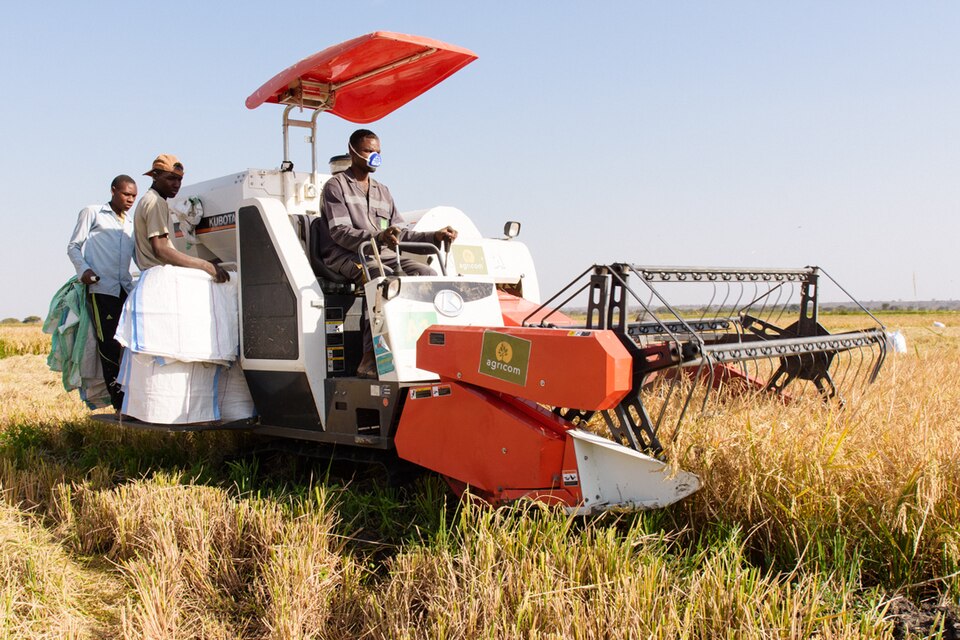 Rice harvesting — Photo: Wikimedia CC BY-SA 4.0
Post-Harvest Handling Guides
Reduce losses from 15-25% to 3-5% with proper post-harvest practices. PhilMech offers 50% subsidy on equipment.
🌾 Rice Post-Harvest
1. Harvesting
Harvest at 80-85% maturity (golden grains, hard kernel, 20-25% moisture). Use combine harvester (₱4,000-6,000/ha) or sickle. Minimize grain loss during cutting.
2. Threshing
Mechanical thresher: ₱1,500-2,500/ha. Remove grain from stalks. Winnow to remove debris. Target: <2% grain loss.
3. Drying
Dry to 14% moisture content. Sun drying: 2-3 days on concrete pavement. Flatbed dryer: 4-6 hours, ₱50,000-100,000 setup (50% PhilMech subsidy). Critical: Improper drying causes mold, weevil infestation, and quality loss.
4. Milling
Mill within 1 week of drying. Whiten, polish, and grade. Recovery rate: 60-65% (husked to milled). Store in hermetic bags (GrainPro, IRRI bags) at ₱50-100/bag.
5. Storage
Store at 14% moisture or below. Cool, dry, ventilated area. Protect from rats and insects. Hermetic bags: 6-12 month storage without fumigation.
PhilMech Equipment Subsidy: 50% subsidy on flatbed dryers, recirculating dryers, grain mills, and hermetic storage bags. Apply via Municipal Agriculture Office.
🌽 Corn Post-Harvest
1. Harvesting
Harvest when husks are brown, kernels hard (80-85% dried). Hand-pick or use corn picker. Stack in ventilated area.
2. Shelling
Mechanical corn sheller: ₱15,000-30,000. Separates kernels from cobs. Target: <2% broken kernels.
3. Drying
Dry to 13-14% moisture. Solar dryer: 2-3 days. Mechanical dryer: 6-8 hours. Critical for feed quality and storage.
4. Grading & Storage
Grade by size and moisture. Store in clean, dry warehouse. Use hermetic bags for long-term. Moisture tester: ₱3,000-5,000 (essential tool).
🥬 Vegetables Post-Harvest
Key Principles
Harvest early morning (cool temperatures). Handle gently (bruising reduces shelf life). Pre-cool immediately. Grade and pack in ventilated containers. Transport in refrigerated trucks when possible.
Shelf Life Extension
Leafy vegetables: 2-3 days ambient, 7-10 days refrigerated. Fruiting vegetables: 5-7 days ambient. Root crops: 2-4 weeks ambient. Proper handling reduces losses from 30% to 10%.
🐟 Fish Post-Harvest
Immediate Steps
Ice immediately (1:1 ice-to-fish ratio). Clean and gut within 2 hours. Grade by size. Store at 0-4C. For smoked fish (tinapa): brine, dry, smoke 2-3 hours. For dried fish (daing): salt, sun-dry 2-3 days.
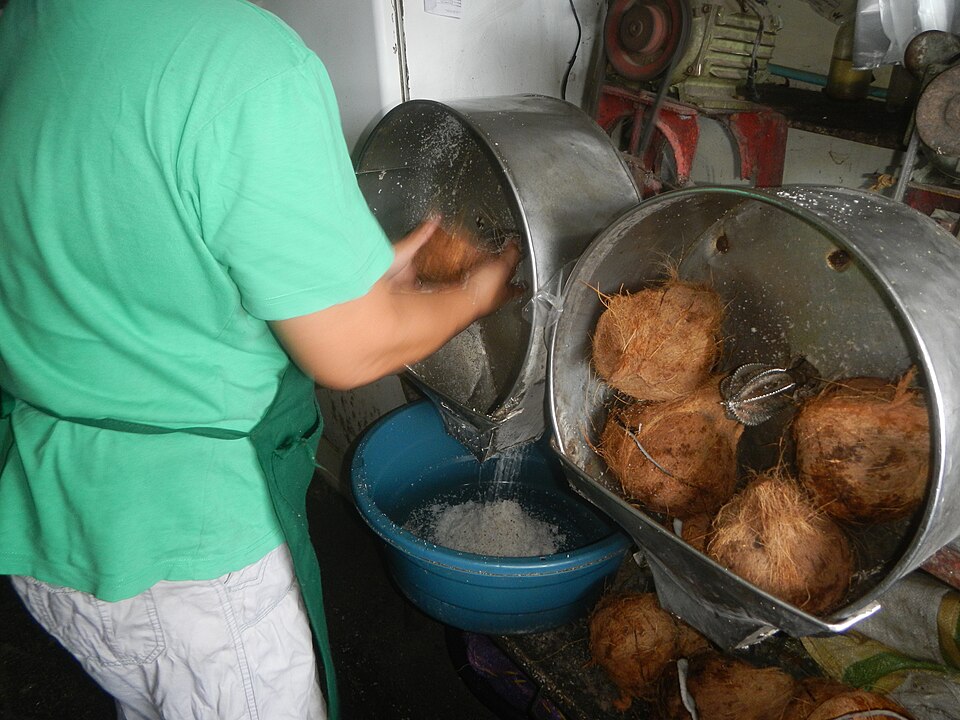 VCO production, Philippines — Photo: Wikimedia CC BY-SA 4.0
Processing and Value Addition
Turn raw produce into higher-value products. Processing can increase revenue 2-5×.
🥥 Virgin Coconut Oil (VCO)
Process
Fresh coconut meat → grate → extract milk (cold press) → ferment 24 hrs → separate oil → filter → bottle. No heat involved (cold-pressed).
Equipment
Coconut grater (₱5,000-15,000), press (₱20,000-50,000), fermentation tanks, bottles, labels. Total setup: ₱50,000-150,000.
Economics
100 coconuts → 5-7 liters VCO. At ₱300-400/liter = ₱1,500-2,800 revenue vs. ₱500 copra value. 3-5× value increase. Shelf life: 1-2 years.
🍫 Cacao to Chocolate
Process
Fermented beans → sun-dry → roast (120-150C, 20-30 min) → winnow → grind → conch (refine 12-24 hrs) → temper → mold → package.
Equipment
Roaster (₱30,000-80,000), winnower (₱15,000-30,000), melangur/conche (₱50,000-200,000), tempering machine. Total: ₱150,000-500,000 for small-scale.
Economics
Dried beans: ₱180/kg. Chocolate bars: ₱800-1,500/kg. 4-8× value increase. Specialty single-origin bars command premium prices.
☕ Coffee Processing
Washed Process
Pick red cherries → depulp → ferment 12-24 hrs → wash → dry on raised beds 10-14 days → hull → grade. Produces clean, bright flavors.
Natural Process
Pick red cherries → dry whole cherry on raised beds 2-3 weeks → hull → grade. Produces fruity, full-bodied flavors. Premium prices.
Economics
Green beans: ₱100-800/kg depending on grade. Roasted: ₱300-1,500/kg. Ground: ₱400-2,000/kg. Specialty single-origin from NegOr/Bohol can fetch ₱1,000+/kg roasted.
🐟 Fish Processing
Tinapa (Smoked Fish)
Clean → brine (salt water, 2-4 hrs) → dry (1 hr) → smoke (2-3 hrs using rice hull or sawdust). Shelf life: 1-2 weeks. Price: ₱150-250/kg vs. ₱80-120 fresh.
Dried Fish (Daing/Tuyo)
Clean → salt (dry salt or brine, 12-24 hrs) → sun-dry 2-3 days. Pack in plastic. Shelf life: 3-6 months. Price: ₱200-400/kg dried vs. ₱80-120 fresh.
Bangus Processing
Boneless bangus: ₱200-300/kg vs. ₱80-120 whole. Smoked bangus: ₱150-250/kg. Daing (dried): ₱180-280/kg. Deboning alone doubles the price.
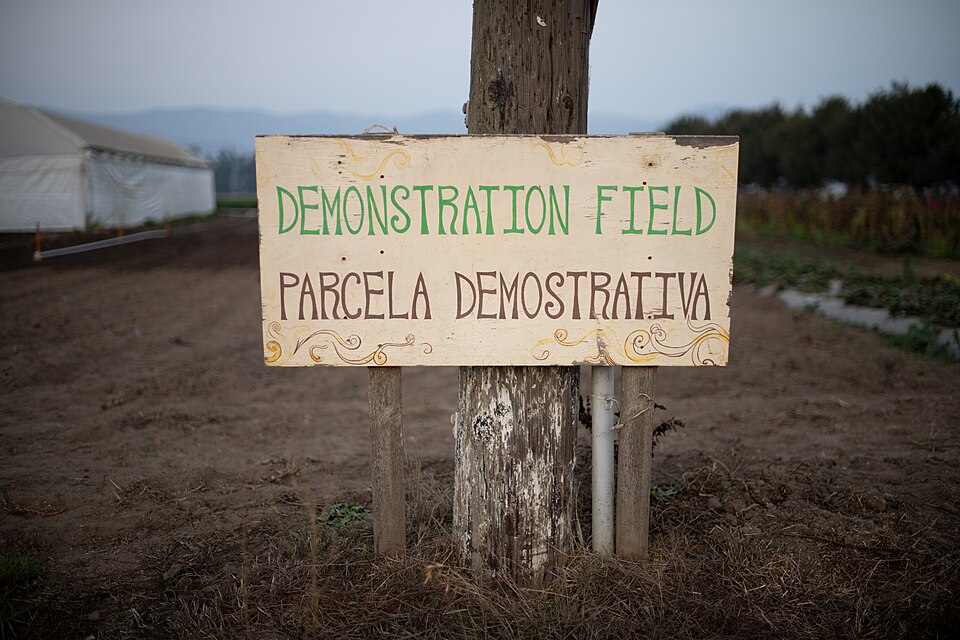 Farmers training — Photo: Wikimedia USDA PD
ATI Training Programs
Free agricultural training courses from the Agricultural Training Institute — Region 7.
Available Training Modules
| Course | Duration | Target Audience | How to Enroll |
|---|---|---|---|
| Farmers Field School (FFS) | 12 weeks | Rice/corn farmers | Visit Municipal Agriculture Office |
| Organic Agriculture Production | 8 weeks | All farmers | ATI-RTC 7: (032) 253-3491 |
| Integrated Pest Management | 4 weeks | Crop farmers | ATI website: ati.gov.ph |
| Small Ruminant Production | 6 weeks | Goat/sheep raisers | ATI-RTC 7 or Municipal Ag Office |
| Poultry Production | 4 weeks | Poultry raisers | ATI-RTC 7 |
| Farm Business Management | 3 days | Farmers, coop leaders | ATI website or regional office |
| Post-Harvest Technology | 2 days | All farmers | PhilMech or ATI-RTC 7 |
| Korean Natural Farming (KNF) | 5 days | Organic farmers | ATI-RTC 7 or DA-RFO 7 |
| Leadership Development | 5 days | Coop leaders, farmer leaders | ATI website |
| Agricultural Entrepreneurship | 3 days | Farmers, youth | ATI-RTC 7 |
Note: Schedule varies. Contact ATI-RTC 7: (032) 253-3491 for current offerings. Online courses available at elearning.ati.gov.ph. Scholarships available for 2-year agricultural technology courses.
Scholarships Available
Young Farmers Scholarship
Full scholarship for 2-year agricultural technology course. Age 15-30. Covers tuition, allowance, and materials. Apply via ATI website.
ATI Training Scholarship
Free training with meals and materials. Priority to RSBSA-registered farmers. 5-12 weeks duration. Apply via Municipal Agriculture Office.
DA-ATI ICT-Based Extension
Online courses on farming, livestock, business. Self-paced. Free certificate upon completion. Available at elearning.ati.gov.ph.
Farm Financial Management
Basic financial skills every farmer needs to maximize income and access credit.
📊 Calculating Cost of Production
Every farmer must know their cost of production (COP). This determines profitability.
Formula
COP = Total Costs / Total Production
Example: Rice farmer spends ₱40,000/ha, harvests 3.5 tons.
COP = ₱40,000 / 3,500 kg = ₱11.43/kg
What to Include in Costs
✓ Seeds ✓ Fertilizer ✓ Pesticide ✓ Labor (family + hired) ✓ Land preparation ✓ Irrigation fees ✓ Transport ✓ Post-harvest ✓ Depreciation of tools
Break-Even Price
The minimum selling price to avoid loss. If COP = ₱11.43/kg and you sell at ₱25/kg:
Profit = ₱25 - ₱11.43 = ₱13.57/kg
Annual profit = ₱13.57 × 3,500 kg = ₱47,495/ha
💵 Cash Flow Management
Farming is seasonal. Income and expenses don't happen at the same time.
Seasonal Cash Flow (Rice)
Planting (Month 1-2): Expenses only — seeds, fertilizer, labor. No income.
Growth (Month 3-5): Minimal expenses. No income.
Harvest (Month 6): All income at once.
Post-Harvest (Month 7): Sell and process.
Planning Tips
1. Budget for ALL expenses before planting season
2. Set aside 10-20% of harvest income for next crop
3. Keep a simple expense diary (notebook or phone)
4. Separate farm money from personal money
5. Use cooperative savings programs
📈 Accessing Credit
Credit helps scale farming. But borrow wisely.
Before Applying
1. Know your COP and expected income
2. Have a simple business plan (1 page)
3. Be RSBSA-registered (required for most programs)
4. Join a cooperative (better rates, easier approval)
Credit Options by Size
Small (₱5-25K): DA-SURE (0% interest), cooperative lending
Medium (₱25-500K): Landbank (2-3%), cooperative banks
Large (₱500K+): DBP, Landbank, PhilBanking
Golden Rule
Borrow only what you can repay from ONE harvest. If your net income per crop is ₱40,000, don't borrow more than ₱40,000 for that crop cycle.
📝 Record Keeping
Simple records help you make better decisions and access credit.
What to Record
Daily: Labor hours, weather
Weekly: Inputs used, expenses
Monthly: Income, total expenses
Per Crop: Yield, total cost, revenue, net income
Simple Template
Date | Item | Quantity | Cost | Notes
--- | --- | --- | --- | ---
May 1 | Seeds (NSIC Rc 222) | 40 kg | ₱2,000 | 2 bags
May 5 | Fertilizer (14-14-14) | 50 kg | ₱1,200 | 1 bag
May 15 | Transplanting labor | 2 days | ₱800 | 4 workers
Digital Tools
Free apps for farm record-keeping: FarmLogs, AgriApp PH, or simple Google Sheets. Start with a notebook if digital tools aren't accessible.